Common Electronic Parts
The following may help you navigate the most common electronics parts we use from the lab supply. Additional tables of parts we have available can be found on Components and Materials.
For a searchable index of all lab parts, please see Physical Computing Lab Inventory.
Microcontrollers
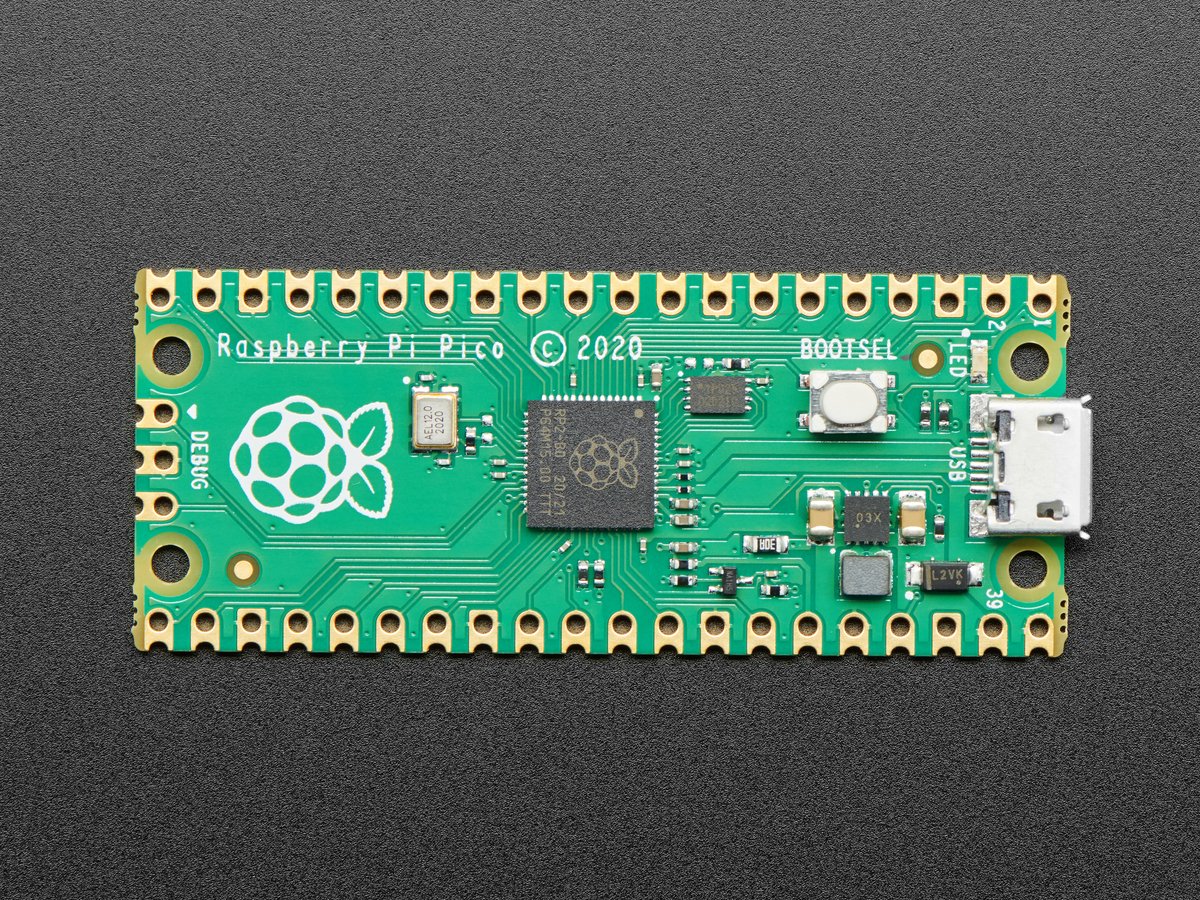
The Raspberry Pi Pico is a low-cost microcontroller board from the Raspberry Pi Foundation which we will be using for the course. It supports programming in CircuitPython, MicroPython, and C++. Please note this device uses 3.3V logic (not 5V) so not all Arduino circuit examples are compatible. The Pico uses a USB micro-B cable for programming or power. More details: Raspberry Pi Pico datasheet. Lab Part 1005.
Breadboarding and Wiring
Solderless breadboards provide a grid of sockets for developing electronic circuits and microcontroller projects, composed of conductive strips beneath the nonconductive cover.
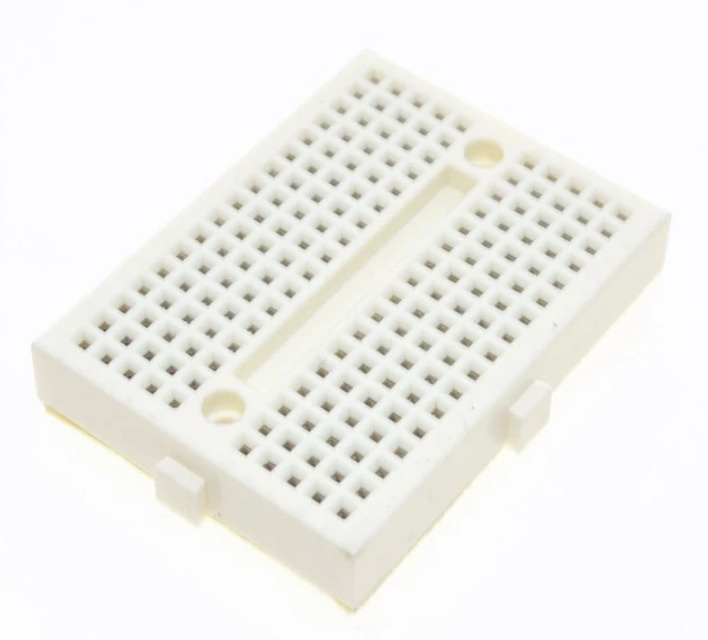
This small breadboard is sometimes useful for mounting an individual sensor circuit. The grid has 17 rows with no power busses. Lab Part 2108.
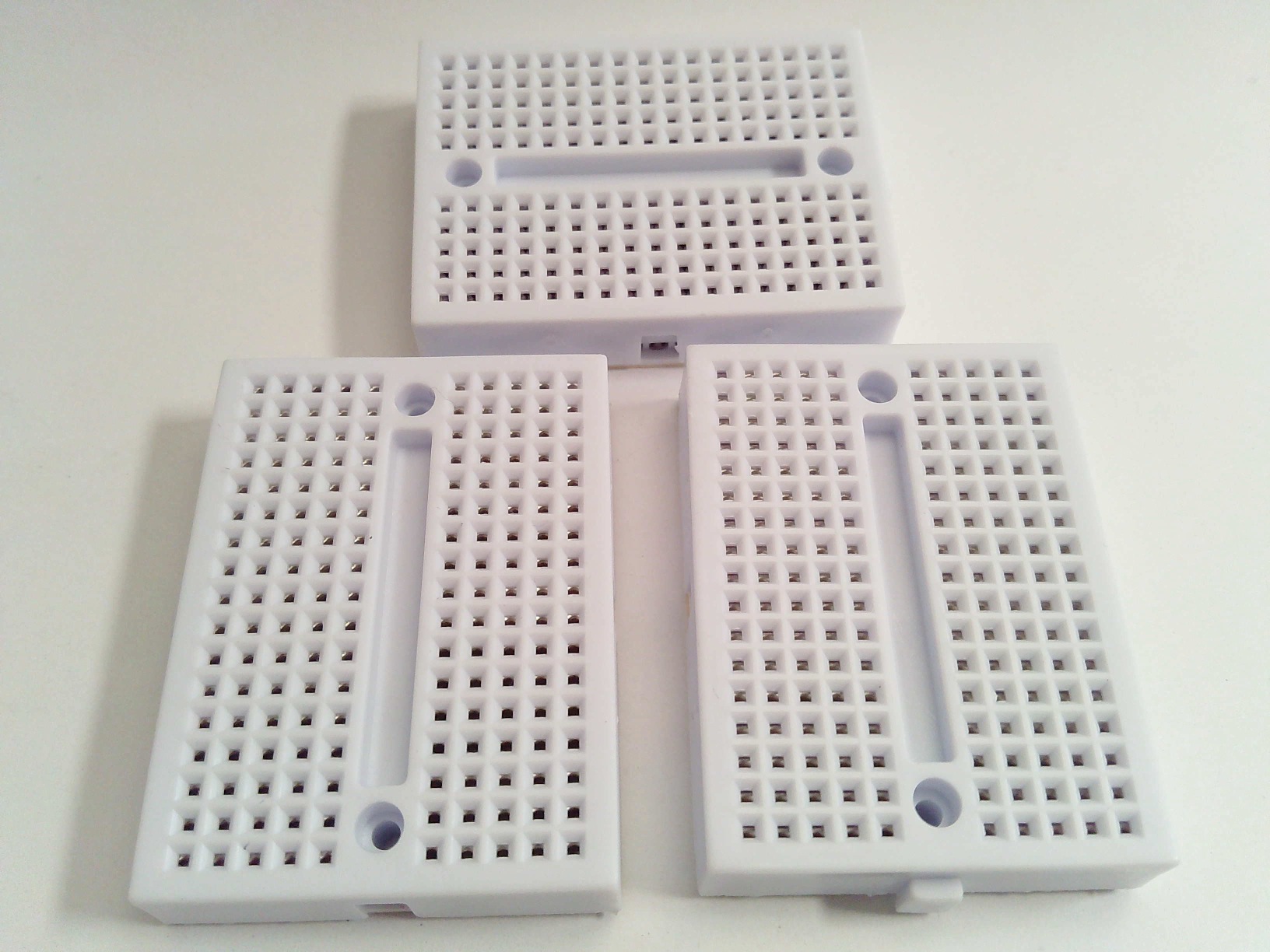
This medium breadboard is a convenient size for a Pico plus a small external circuit. The main grid has 30 rows, the Pico uses 20. Lab Part 2106.
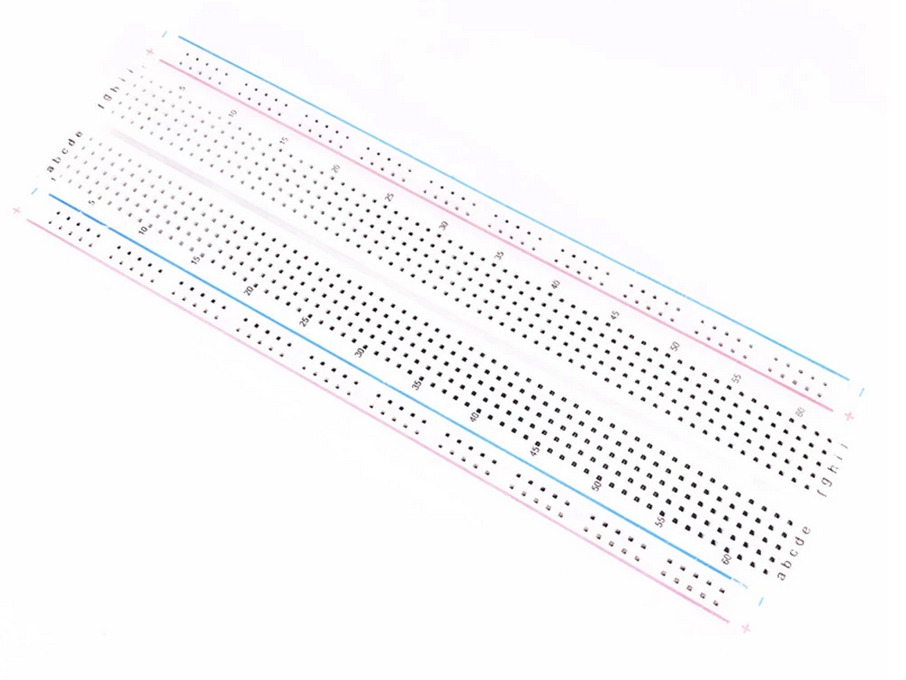
The large breadboards have 63 rows in the main grid, plus four long power busses on the sides. Note: in some versions of this large breadboard the power busses have a break in the center, indicated by a break in the red and blue lines. Lab Part 2104.
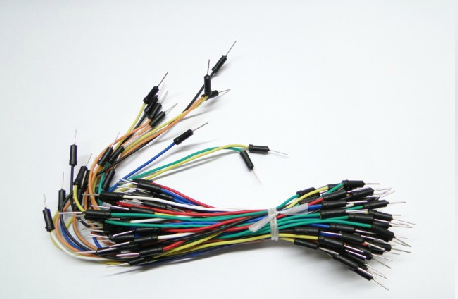
Jumper wires have two pins used to make an electrical connection between two sockets. Lab Part 2102.
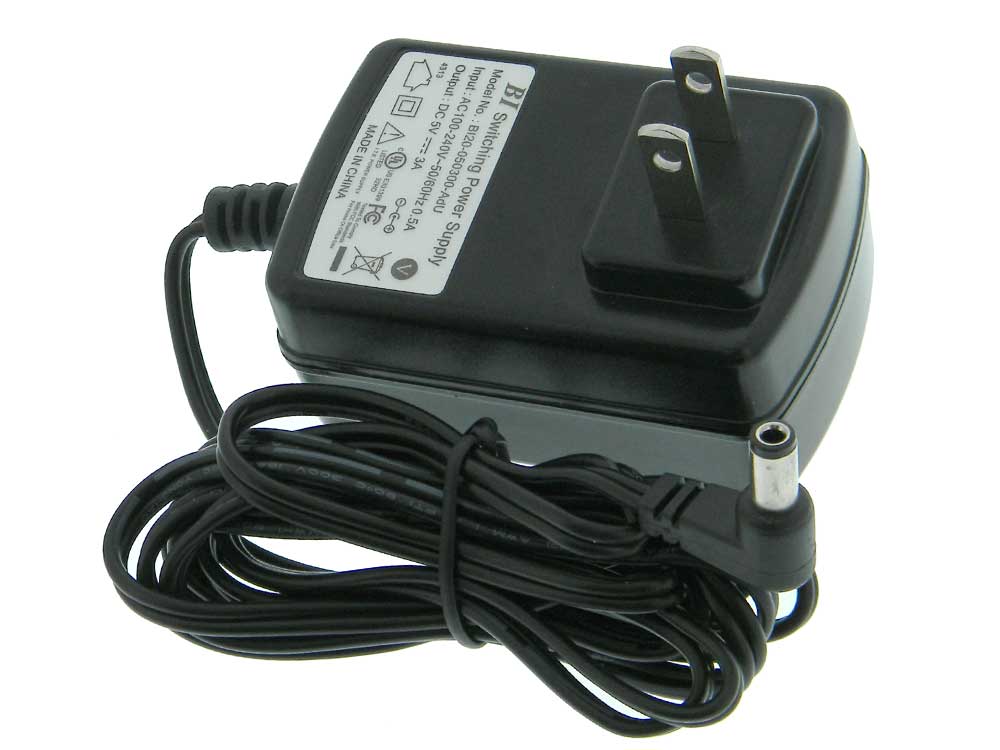
This 5 Volt power supply is useful for powering small gearmotors or large hobby servos. 5V 3A output, 120V input, switching, 5.5mm center-positive barrel jack output. Lab Part 1395.
Note: the barrel jacks have oversize holes and don’t always mate reliably to adapters (part 0789); a quick fix is to bend the adapter pin slightly off center.
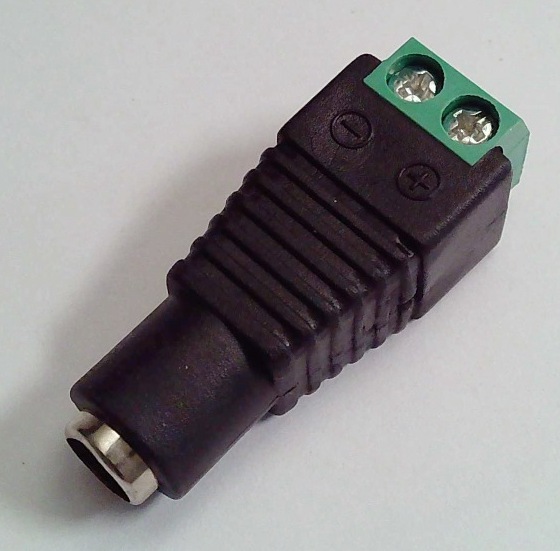
Barrel jack to screw terminal adapter intended for connecting the 5V power supply to wire leads. Female, 5.5mm larger diameter x 2.1mm center pin diameter, screw terminal. Lab Part 0789.
Motor and Power Drivers
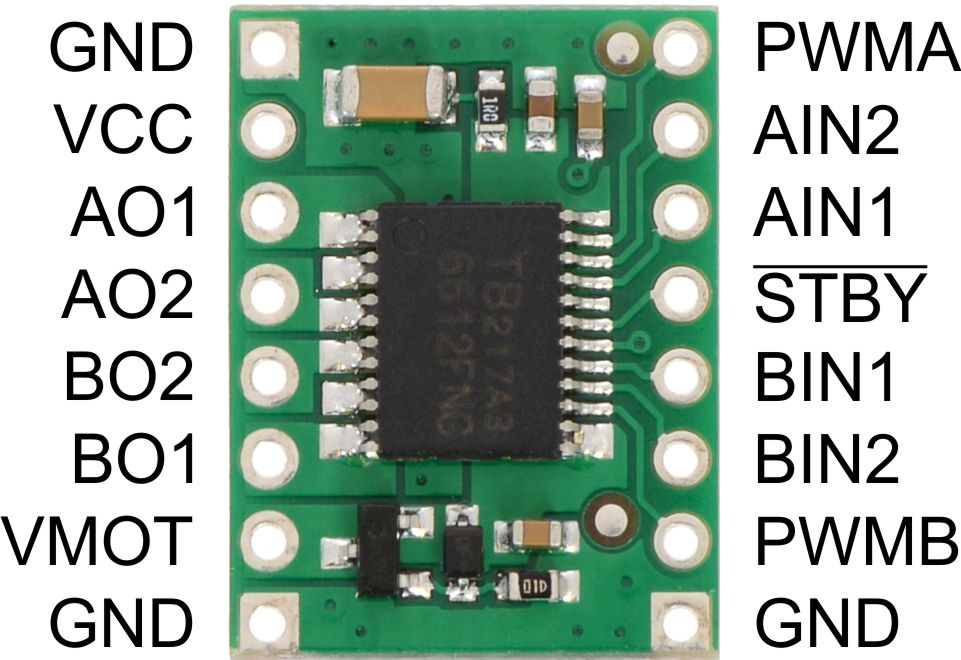
The TB6612FNG driver can control two small motors bidirectionally PWM and direction signals for each motor. Dual H-bridge, 1A continous (3A peak) per channel, 4.5V-13.5V. Lab Part 0485.
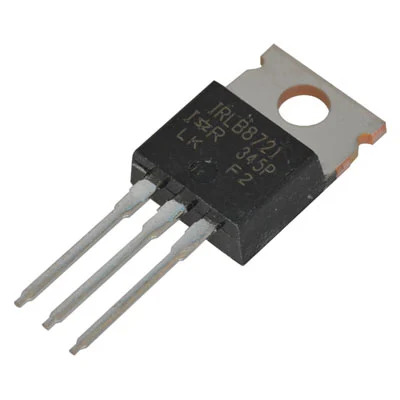
IRLB8721PbF MOSFET power transistor which can switch large currents using a logic-level control input. This particular part has a gate threshold low enough to work from 3.3V logic like the Raspberry Pi Pico. Typically these operate as high-speed ON/OFF switches with variable output produced using PWM. Lab Part 8721.
Sensors and Switches
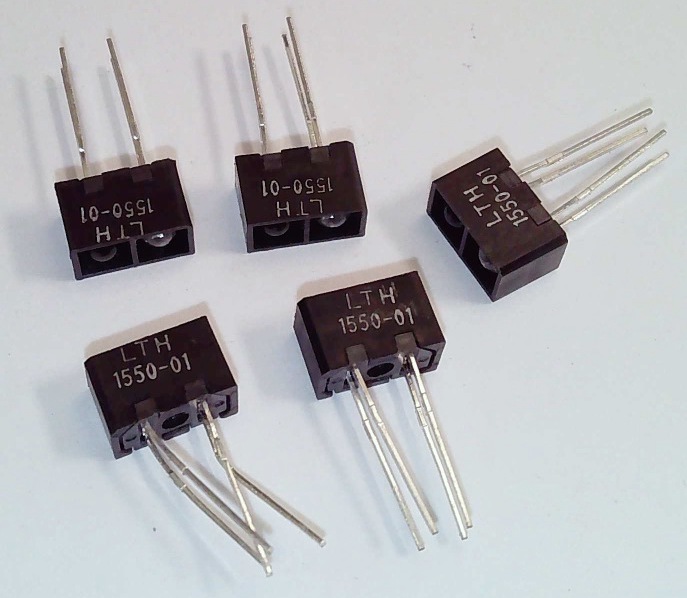
This active sensor emits invisible infrared light and detects when a nearby object reflects it back into the phototransistor sensor. It requires two external resistors to operate. The response time is fast, this can be used for non-contact motion sensing in conjunction with a slotted disc. LTH 1550-01 photoreflective proximity sensor, infrared, NPN phototransistor. Lab Part 0237.
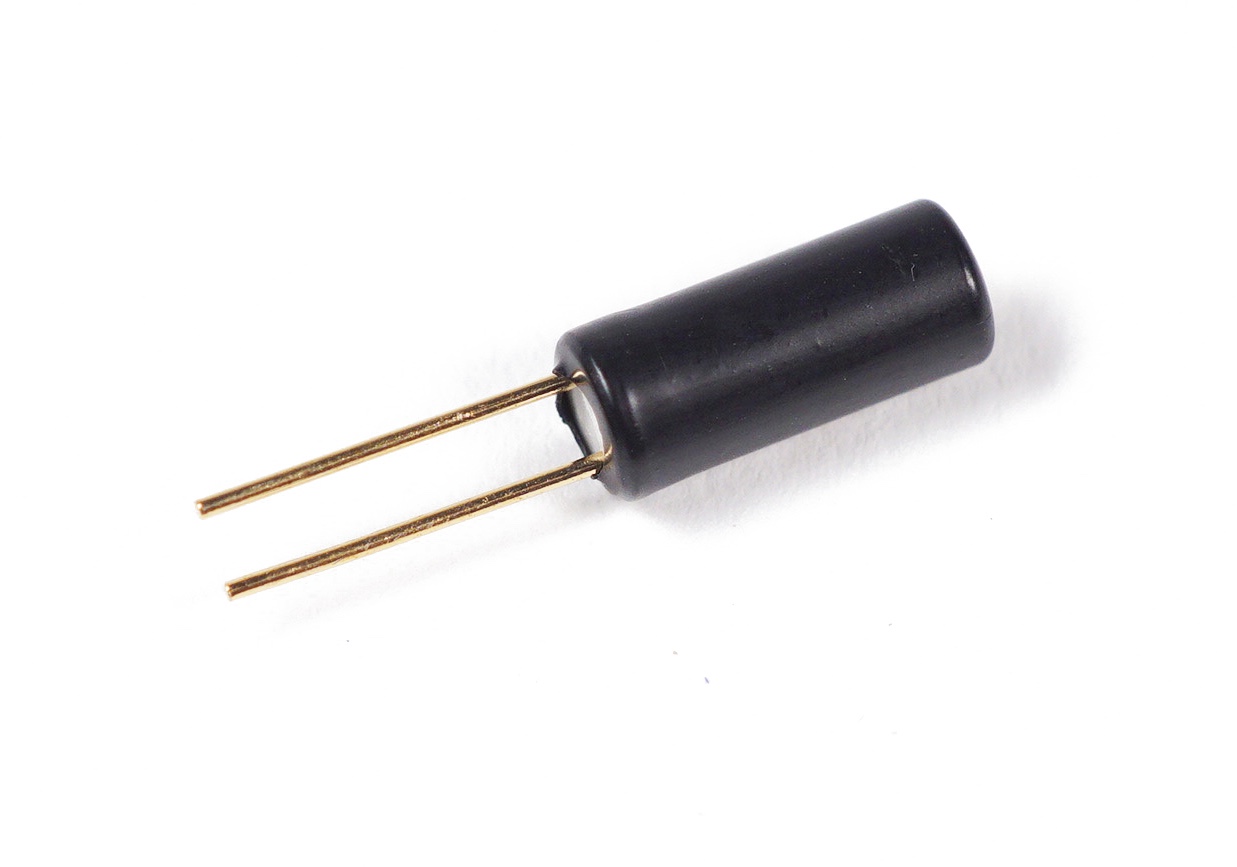
A tilt-sensitive switch which uses a conductive ball moving inside the housing to detect tilt or motion. SPST. Lab Part 0272.
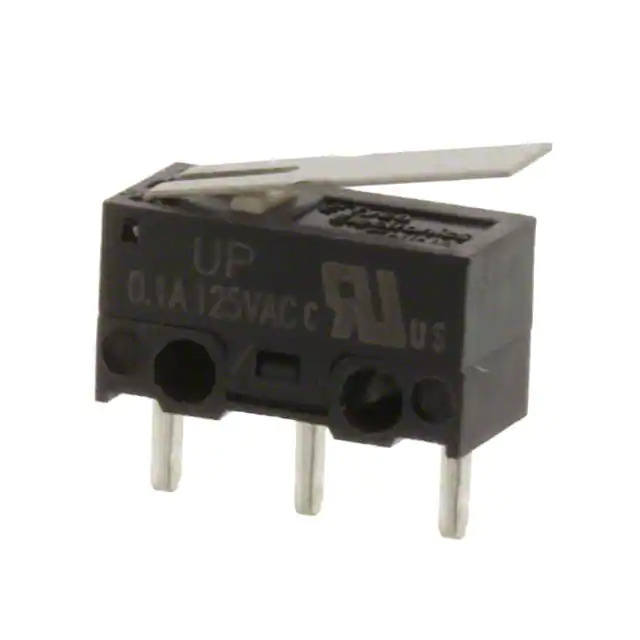
Microswitch, lever, small size, breadboard compatible, UP01DTANLA04, SPDT. Lab Part 0350.
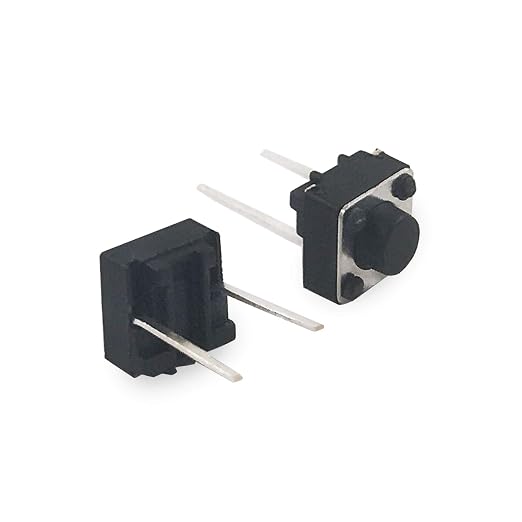
Momentary pushbutton siwtch, breadboard compatible, SPST. Lab Part 0355.
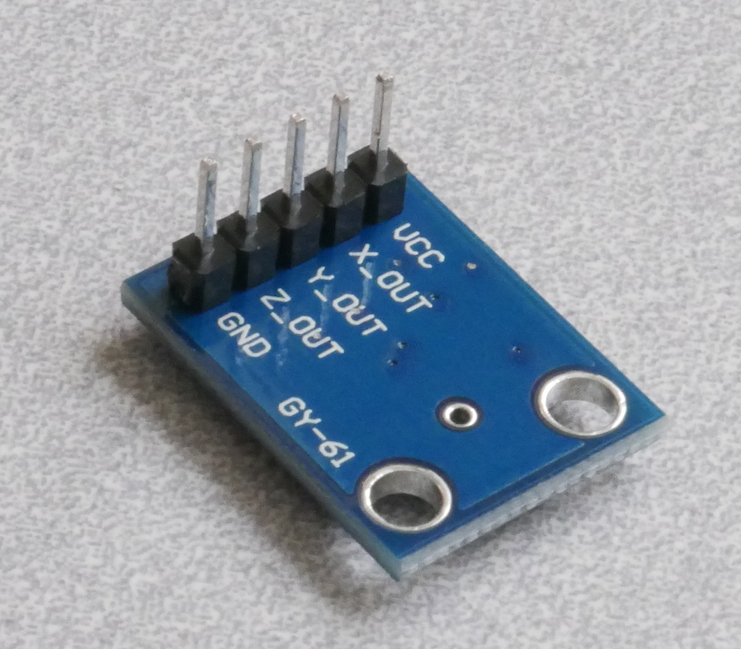
Analog accelerometer, 3-axis, analog output, ADXL335. Lab Part 0368.
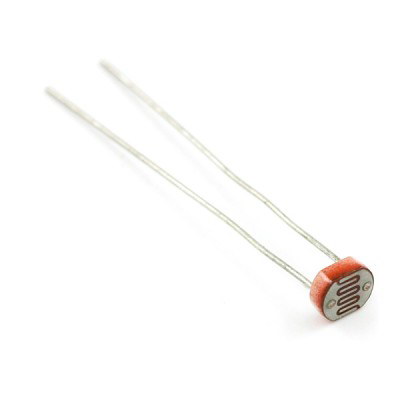
This CdS photocell sensor has resistance which decreases in bright light. The response time is relatively slow, it is intended for light-level measurement, not motion sensing. Lab Part 0260.
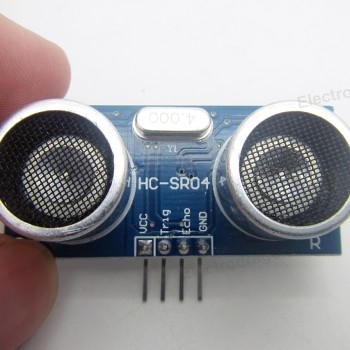
This active sensor emits inaudible ultrasonic sound pulses and detects the returned echoes. HC-SR04. Lab Part 0572.
Resistors
The lab stocks carbon-composition resistors with 1/4 Watt rating and 5% tolerance in a wide range of values.
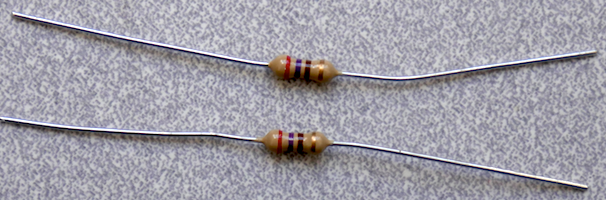
270 Ohm resistor, commonly used as an LED ballast resistor. Lab Part 0019. For more values please see 1/4 Watt Resistors.
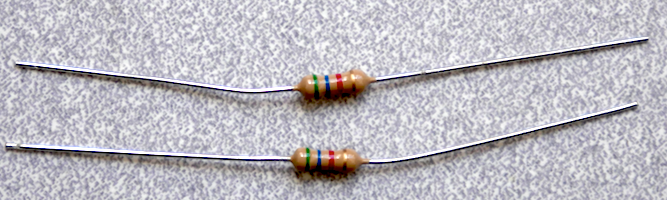
5.6 kOhm resistor, commonly used as a switch pullup resistor. Lab Part 0043. For more values please see 1/4 Watt Resistors.