Lab Inventory: Power and Motor Drivers
The following tables may help you identify power driver parts we have available in the lab supply.
For a searchable index of all lab parts, please see Physical Computing Lab Inventory.
Bidirectional Motor Drivers
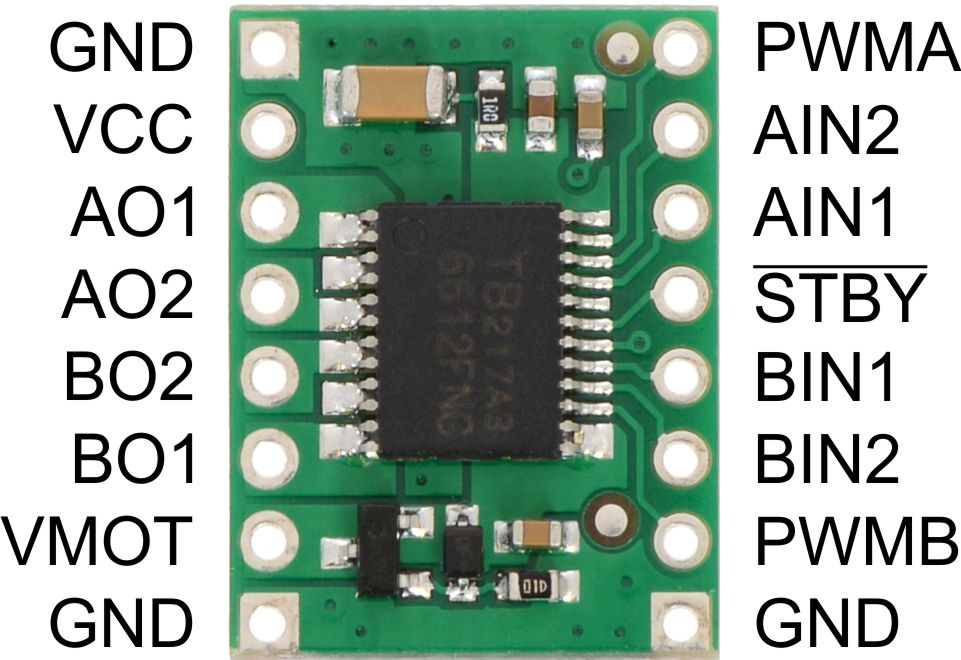
The TB6612FNG driver can control two small motors bidirectionally PWM and direction signals for each motor. Dual H-bridge, 1A continous (3A peak) per channel, 4.5V-13.5V. Lab Part 0485.
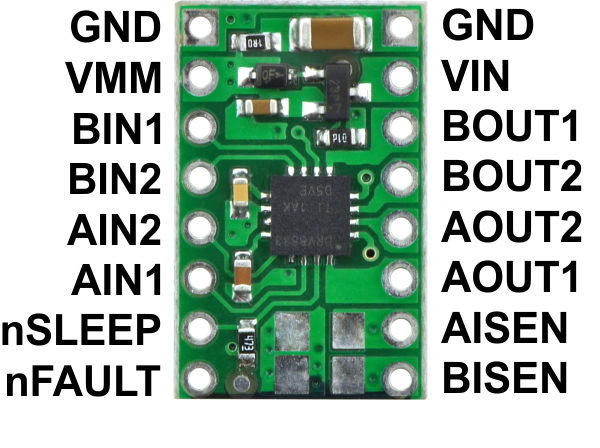
This part is being phased out: this DRV8833 driver can control two small motors bidirectionally using a pair of PWM and direction signals for each motor. Lab Part 0482.
MOSFET Transistors
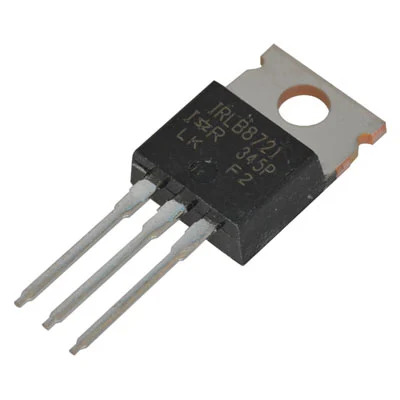
IRLB8721PbF MOSFET power transistor which can switch large currents using a logic-level control input. This particular part has a gate threshold low enough to work from 3.3V logic like the Raspberry Pi Pico. Typically these operate as high-speed ON/OFF switches with variable output produced using PWM. Lab Part 8721.
Value |
Lab Part # |
Description |
|---|---|---|
IRLB8721PbF |
N-channel MOSFET compatible with 3.3V logic |
|
IRF540N |
N-channel MOSFET compatible with 5V logic |
We also stock a few small-signal and P-channel MOSFETS, see the Physical Computing Lab Inventory.
Bipolar Transistors
You may find older reference circuits using the TIP120, a bipolar Darlington transistor. In general I recommend using MOSFET parts instead.
Value |
Lab Part # |
Description |
|---|---|---|
TIP120 |
NPN Bipolar Darlington power transistor |
|
2N2222 |
NPN Bipolar small-signal switching transistor |
|
2N3904 |
NPN Bipolar small-signal switching transistor |
We also stock a few general purpose PNP transistors, see the Physical Computing Lab Inventory.
Transistor Arrays
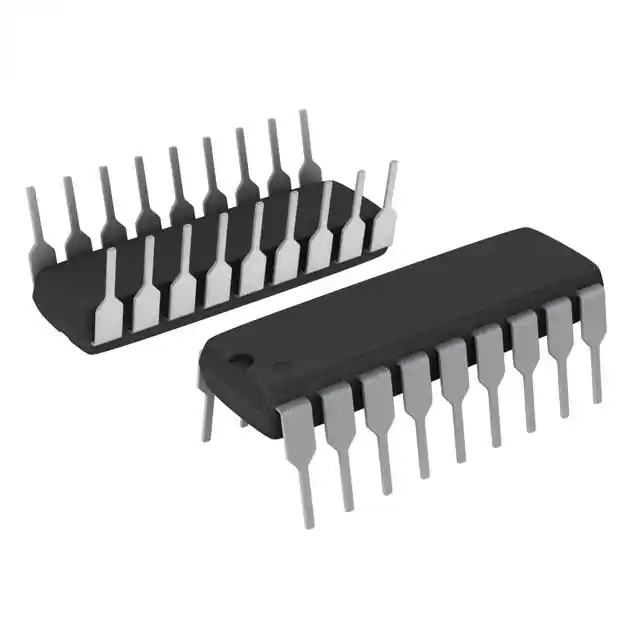
ULN2803 Darlington transistor array, 50V, 500mA per pin, NPN, 18-DIP. Lab Part 2803.
Stepper Motor Drivers
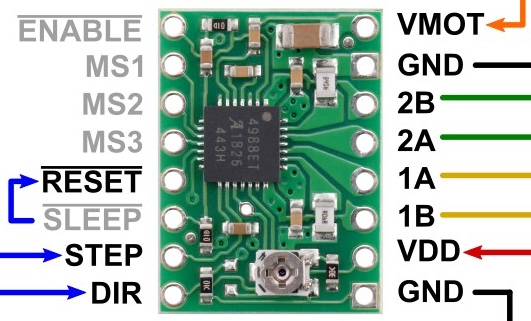
A4988 Stepper Motor Driver, Lab Part 4988. Capable of driving our bipolar NEMA17 stepper motors from a 12VDC supply with microstepping up to 16x: 200 physical steps becomes 3200 positions per revolution. Available from Pololu and generic sources, e.g. Electrodragon. A more detailed tutorial can be found at Robotics for Creative Practice F26 text/electronics/cnc-shield.html.