Sewon Park – LO – 12

As Professor Dannenberg suggested a global warming themed project, I searched some up as inspiration for my own project.
climatequest_3
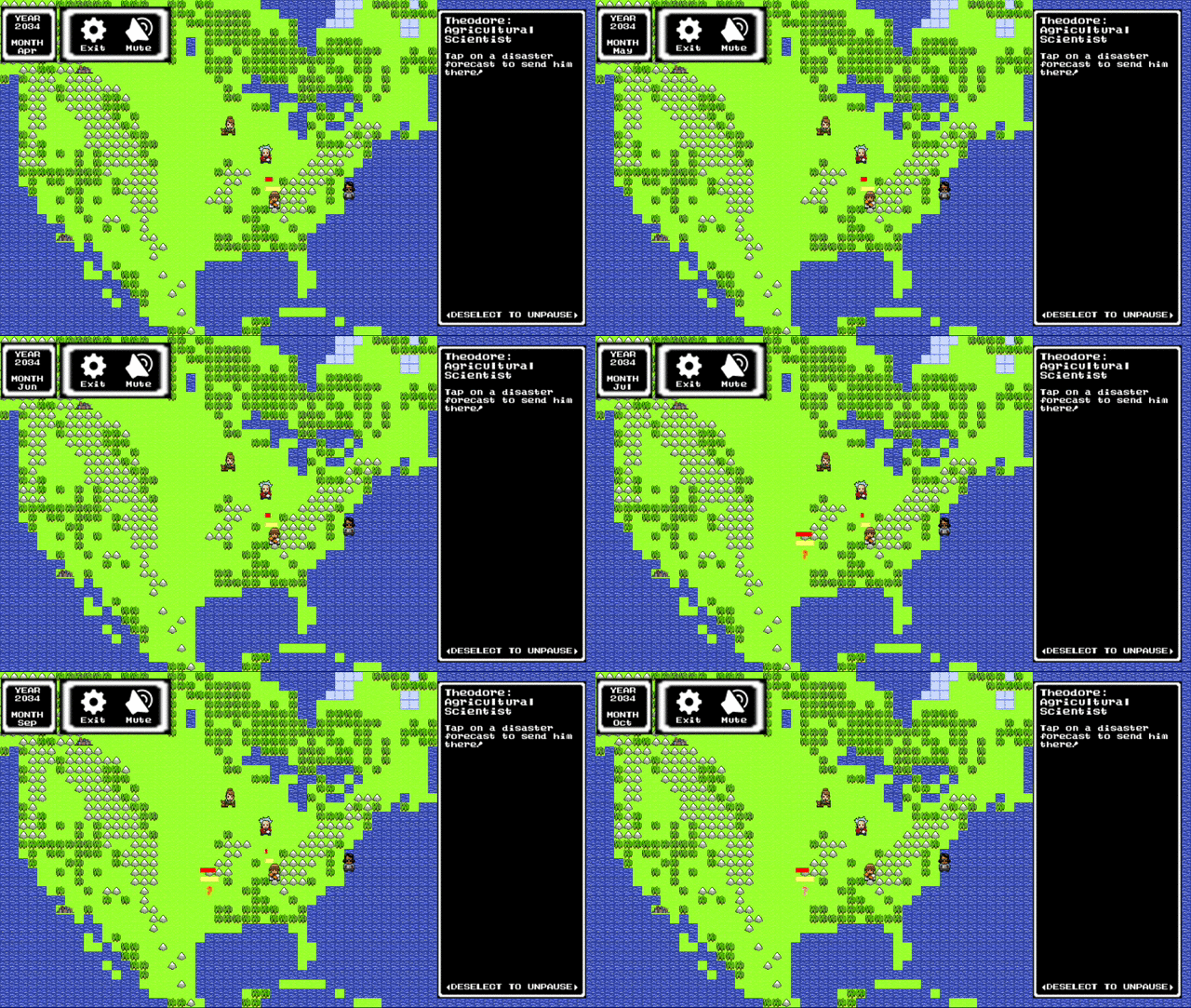
-a screenshot of the game “Climate Quest” by EarthGames (2016)

The one project I saw regarding global warming was the game “Climate Quest”. I think it is very interesting that the makers of the game used climate change as the main theme of a video game. This is interesting as global warming is normally a fairly boring topic that people tend to avoid. Through making a game out of it, the makers devised a clever way to communicate their message to the players.
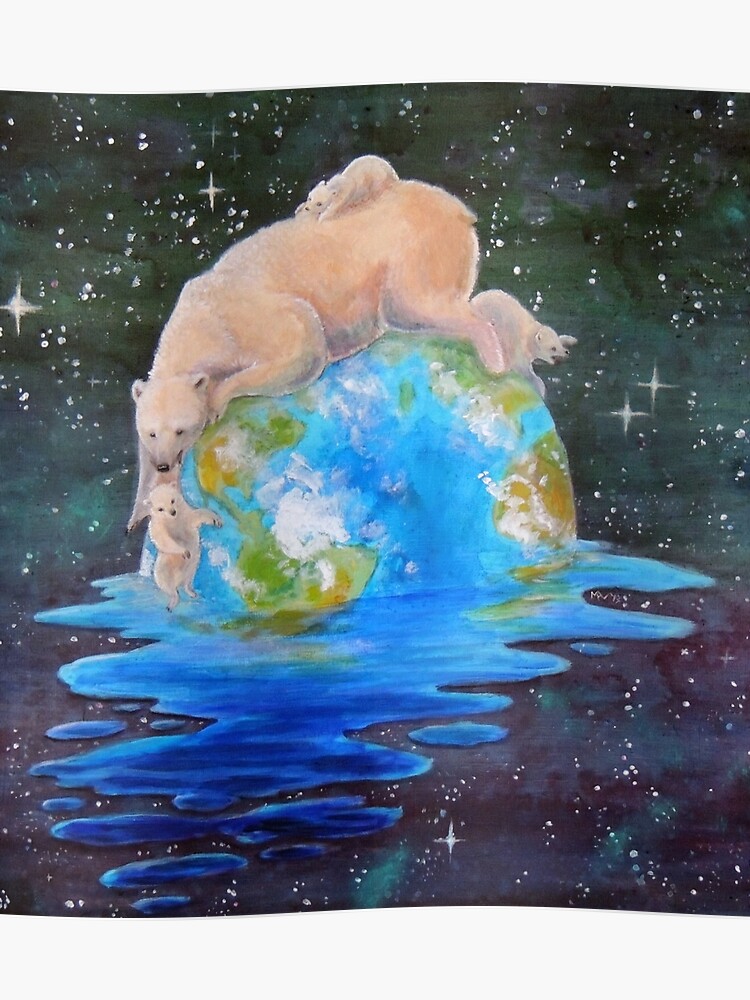
Image result for global warming polar bear and cubs poster
“Global Warming Polar Bear and Cubs” by Stormslegacy

A more classic climate project artwork, this poster uses sentiments to communicate its message to the audience. Although an interactive game is also a very interesting way to communicate this message, one using sympathy is also a crucial one. The two projects have the same theme but very different methods of communicating the message to the audience.

Link: https://earthgames.org/games/climatequest/ (Climate Quest)

Link: https://www.redbubble.com/people/stormslegacy/works/19765199-global-warming-polar-bear-and-cubs?p=poster (Global Warming Polar Bear and Cubs)
Alec Albright – Project 12 – Proposal

For the Final Project, I plan on creating an audio synthesizer that uses motion detection of the user’s hand from their camera to generate sound and visualizations that will be displayed on the screen. The visualizations will probably be layered over the user, and the sound will be constantly generated. Sound properties that will be controlled include volume, pitch, and wavetype, with perhaps occasional “sweet spots” on the screen in which a special sound is played.

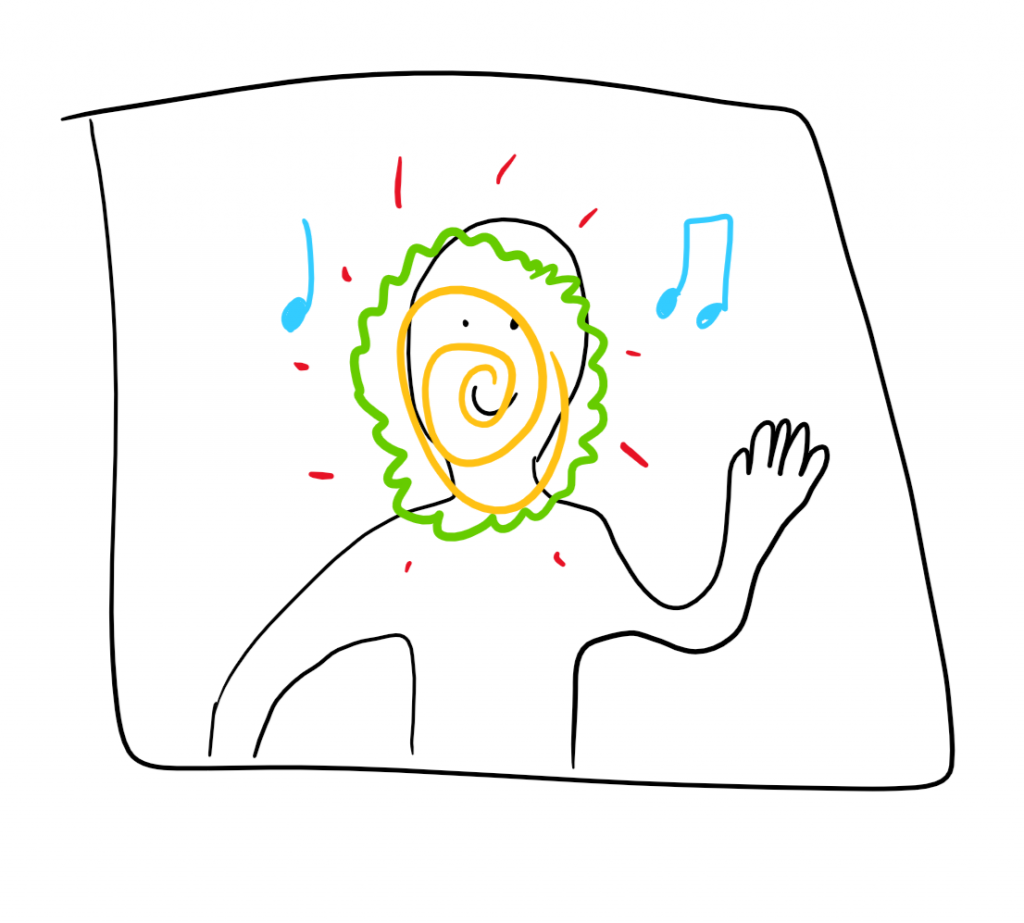
As for the visualizations, these will be made to simulate the timbre of the sound itself. For example, if a sine wave is being generated, a more smooth visualization will be drawn, whereas a square wave will imply more rigidity. A rough sketch of how this might play out (without sound) is depicted below.

VERY rough sketch, will make more sense with audio.

Chelsea Fan-Project 12-Proposal

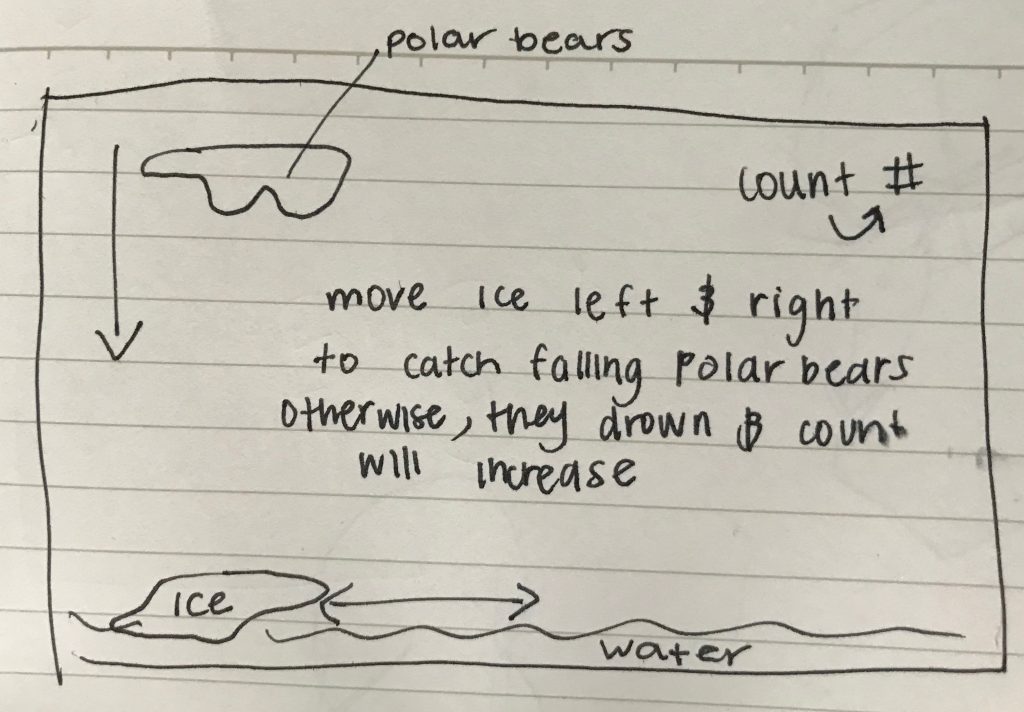
I will be collaborating with Katrina Hu. Together, we will create and interactive game with polar bears falling from the sky. The user will have to catch the polar bears on a slide-able block of ice at the bottom of the screen. If the user catches the polar bears with the ice block, a positive tone will ring. If they miss the polar bear, the bear will fall into the water below and “drown”. From there, the program will play a negative sound and the death count in the corner will increase.

There will be two types of polar bears – A big polar bear and a small polar bear. The small polar bear will fall slightly faster than the big polar bear, thus meaning they will be harder to catch.

As the death number increases, the background color will turn more dreary – meant to signify the number of polar bear deaths due to the climate crisis. And the dreary background is meant to show in increasing climate crisis.

Chelsea Fan-Looking Outward 12

Polli is an environmental artist who focuses on the intersection of art, science and technology. She has done work in public artworks, media installations, community projects, performances, broadcasts, mobile and geolocative media, publications, and through the curation and organization of public exhibitions and events. Currently, She creates artworks designed to raise awareness of environmental issues. I admire that she focuses on work that is beautiful, yet also has a purpose. Similar to my idea for the Final Project, I would also like to use my project to raise awareness to climate crisis environmental issues.

Link to Andrea Polli’s Projects: https://sites.google.com/andreapolli.com/main/projects?authuser=0

Washko on the other hand, is a game artist and designer. She is actually a professor at CMU School of Art. I admire her artwork because it seems edgy and new. Some of her video games explore difficult topics. For example, the feminist game The Game: The Game explores the topics of consent and politics. Similar to my idea for the Final Project, I would like to create an interactive game.

Link to Angela Washko’s Projects: https://angelawashko.com/section/138507.html

Cover Photo for The Game: The Game (n.d.)

Ian Kaneko – 12 – Proposal

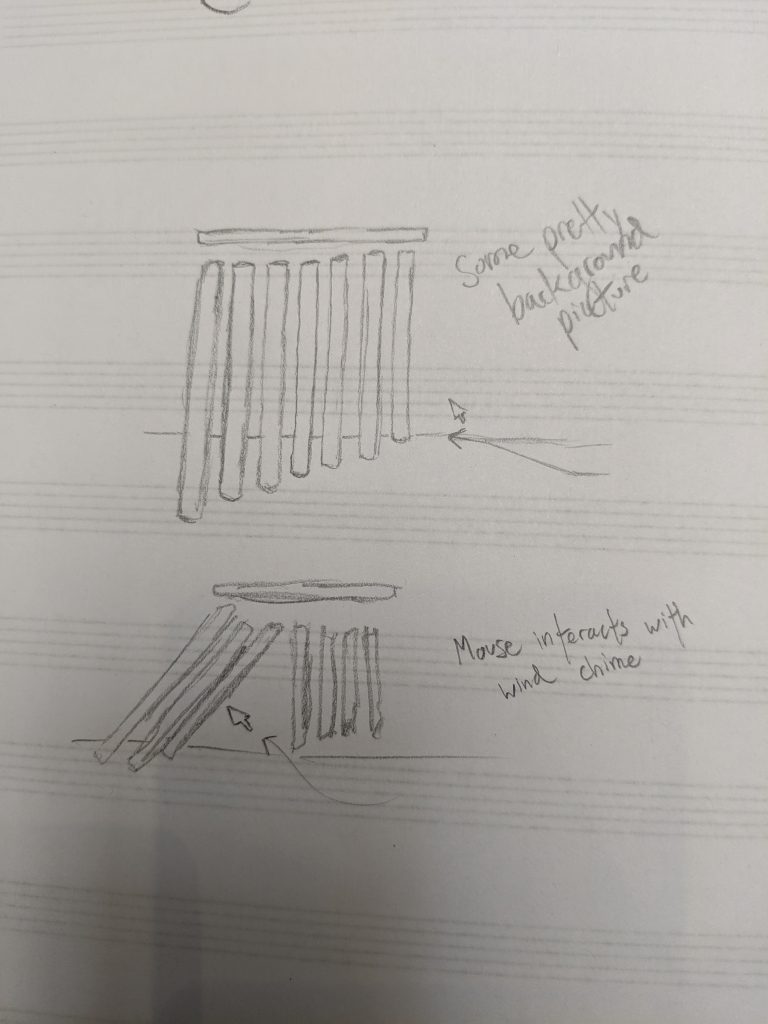
Project sketch

For my final project I want to create wind chimes. They should be able to be pushed by the mouse and make sounds when they collide with each other. The individual chimes will be able to move and react independently to both the mouse and each other. They will be tuned to G, B, D, F#, A, C#, E because it makes a really pretty bright sound. The chimes should react realistically (swinging and losing momentum over time). Chimes will be able to hit each other and create sound without the mouse directly touching them. If I can get everything working, I would also like to find a way to make the amplitude of the sounds change depending on the velocity that the chimes were hit (this step is not going to be a priority though).

Sammie Kim – Looking Outwards – 12

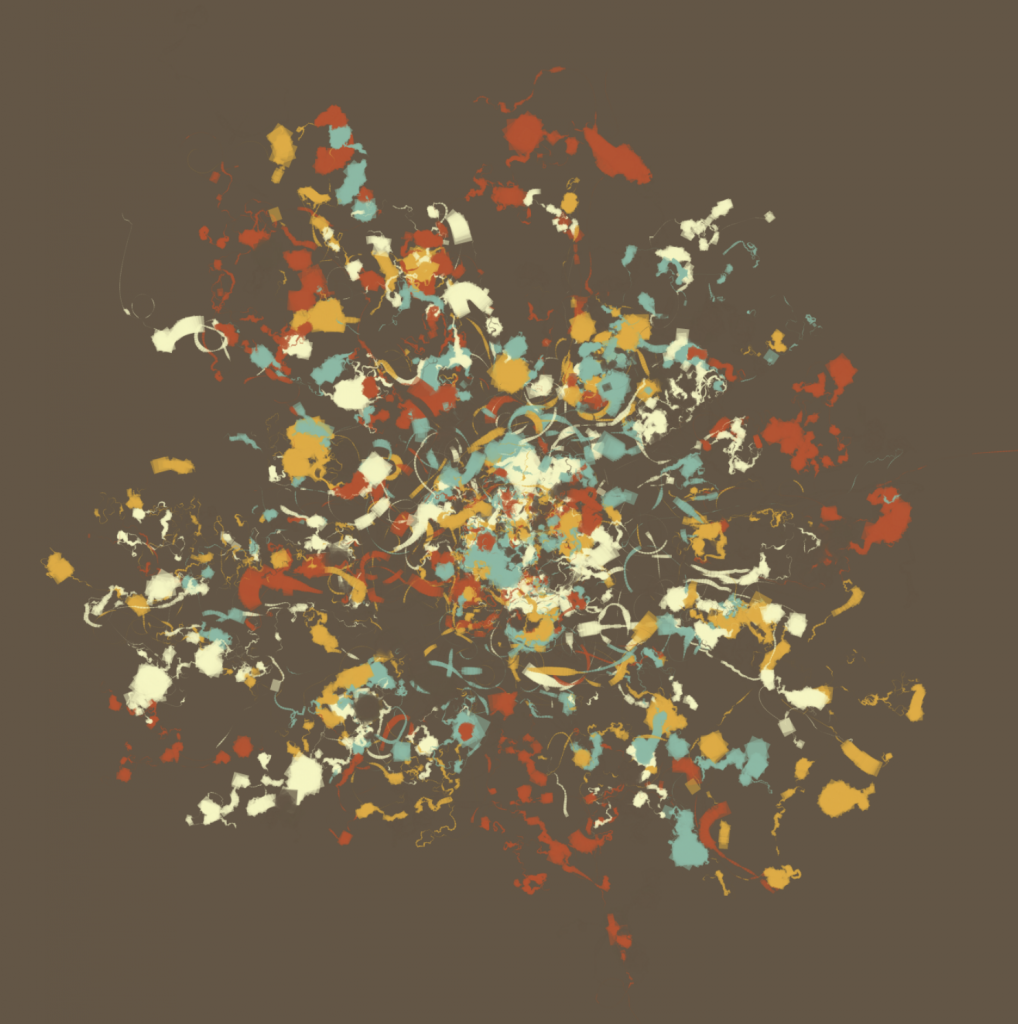
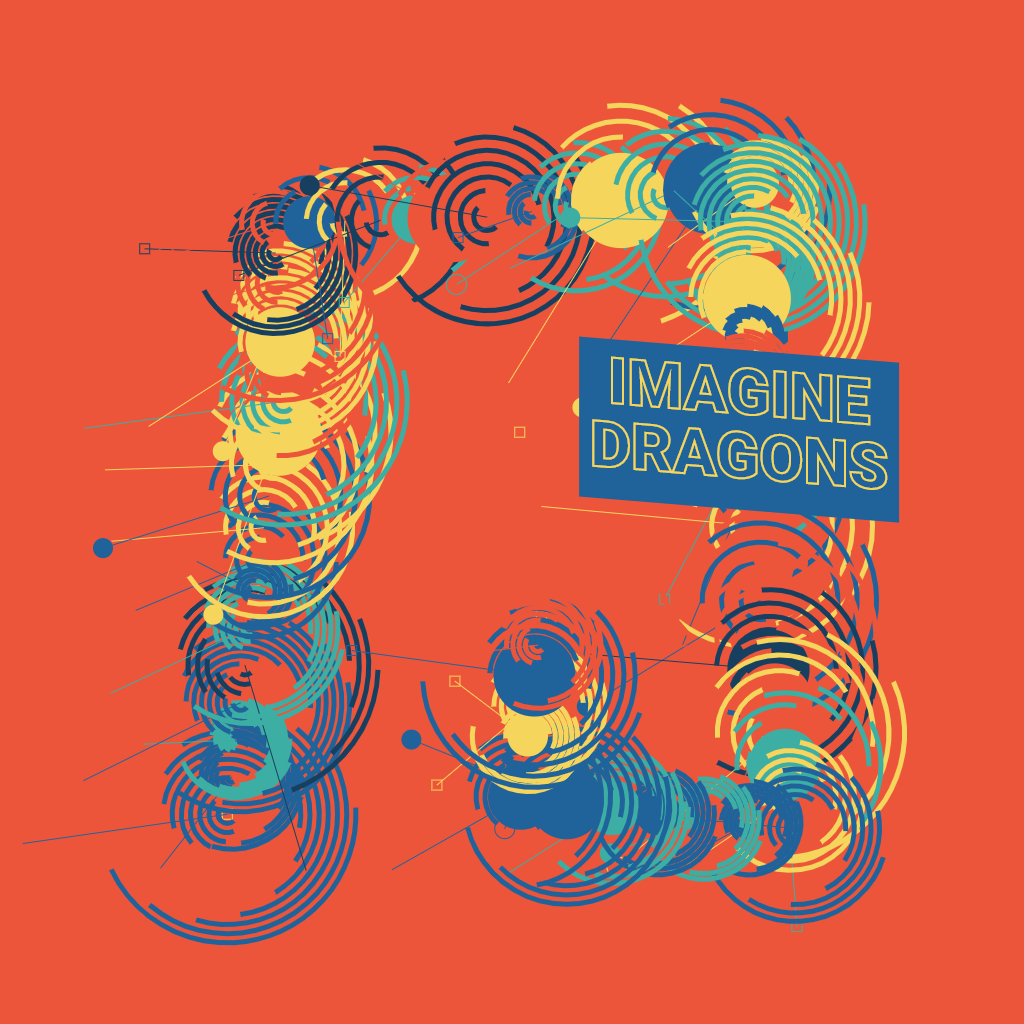
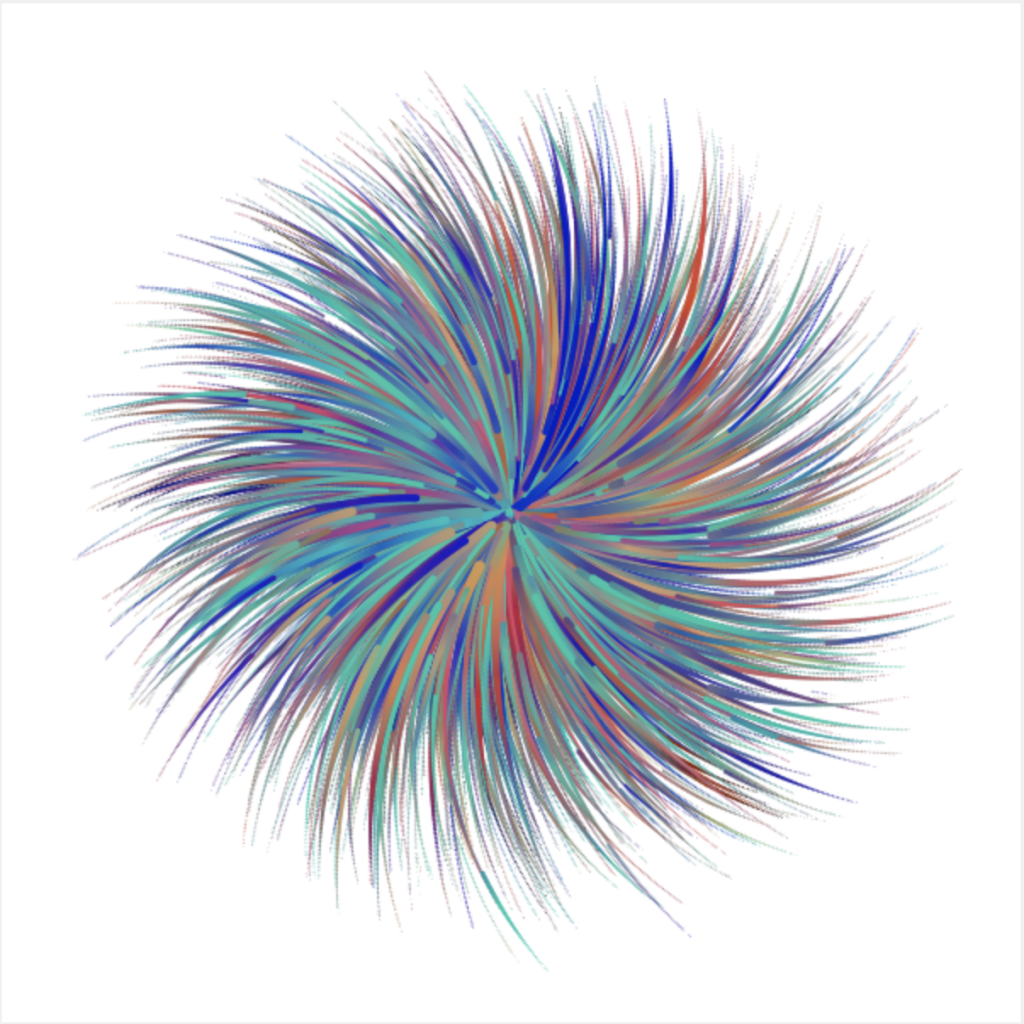
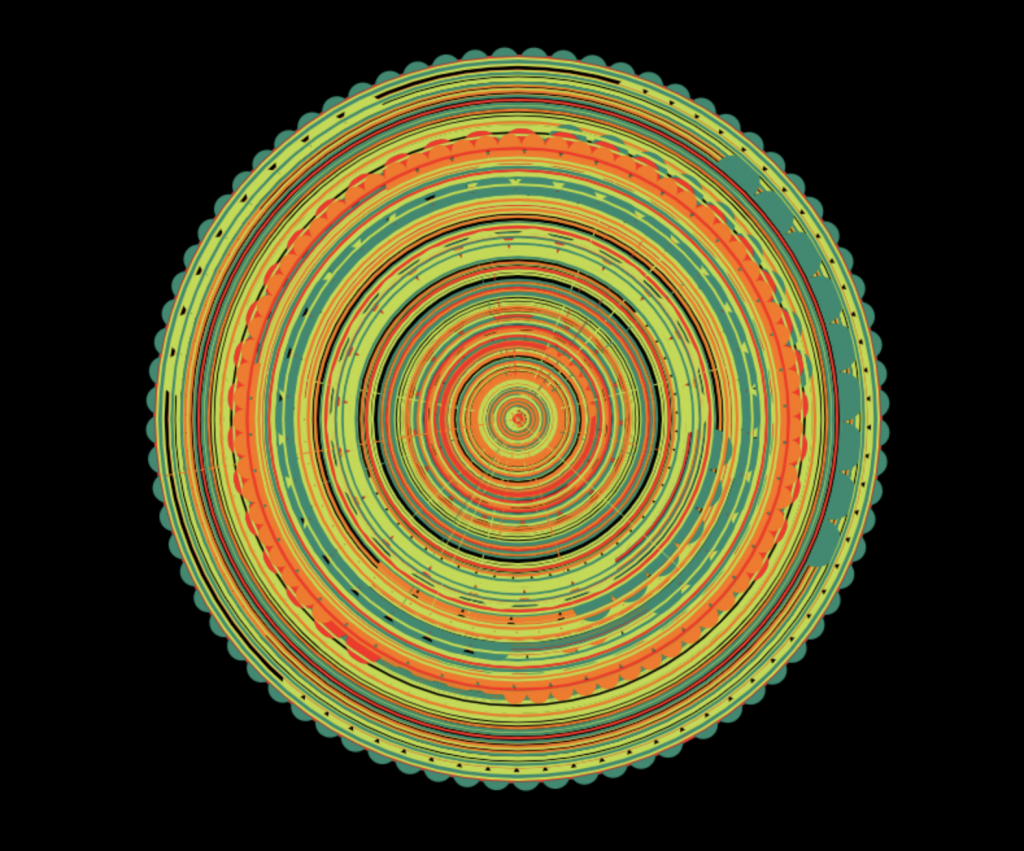
Generative Album cover design by Kostya Ostroukhov and Color Wander by Matt Deslauriers are two projects that deeply inspired me. Kostya Ostroukhov is a graphic designer from Russia; his Generative Album cover project utilizes JavaScript, and the graphics float around that match the mood and style of Imagine Dragons. The idea of a dynamic album cover immediately fascinated me, as it could express the unique aesthetics of the music for a brief moment unlike a music video. On the other hand, Matt Deslauriers is a generative artist and creative coder from Canada. Color Wander is an open source generative artwork that allows users to interact with the screen to produce fascinating textures and patterns come alive. 

I personally feel that both projects could have merged to produce a more adaptable and versatile artwork. Ostroukhov lacks the complexity and interactive element that is evident in Deslauriers’s generative art piece, whereas Deslauriers lacks the purposefulness and entertainment aspect. Yet, I admire each one as I am very intrigued in producing beautiful visual elements that connect with and respond to the user.

Color Wander by Matt Deslauriers
Generative Album cover design by Kostya Ostroukhov

Link to Matt Deslauriers’s website: https://www.mattdesl.com

Link to Kostya Ostroukhov’s works: https://www.behance.net/gallery/76084379/Album-covers-with-generative-design

Alec Albright – Looking Outwards – 12

“Skataviz” by Theo Watson and Emily Gobeille.
“Music Animation Machine” by Stephen Malinowski.

“Skataviz” (2012) by Theo Watson and Emily Gobeille and “Music Animation Machine” (2013) by Stephen Malinowski are two very different yet interesting projects that could serve as inspiration for my final project. The first, “Skataviz”, is a live motion detection program that visualizes the path of a skateboard as it travels in real time. This is admirable because it finely tracks the orientation of the board and is able to focus on only the subject’s board at any given time. However, it seems to overlook the potential use of these mappings. Instead, it simply displays the mapping rather than generating new innovative works from it.

The second project is more focused on demonstrating the cadence and dynamics of music through a computer visualization. This is different from “Skataviz” in that it does not do this in real time. Rather, it takes a musical score as an input and generates a visualization that is traversed in a rhythmical pattern specified by the user. This is admirable because of the way it is able to sync up with instrumental performance as well, as demonstrated in the video. Unlike “Skataviz”, this seems to overlook any real-time processing that, though computationally complex, could move as a function of the sound being produced by the performer.

Mihika Bansal – Project 12 – Proposal

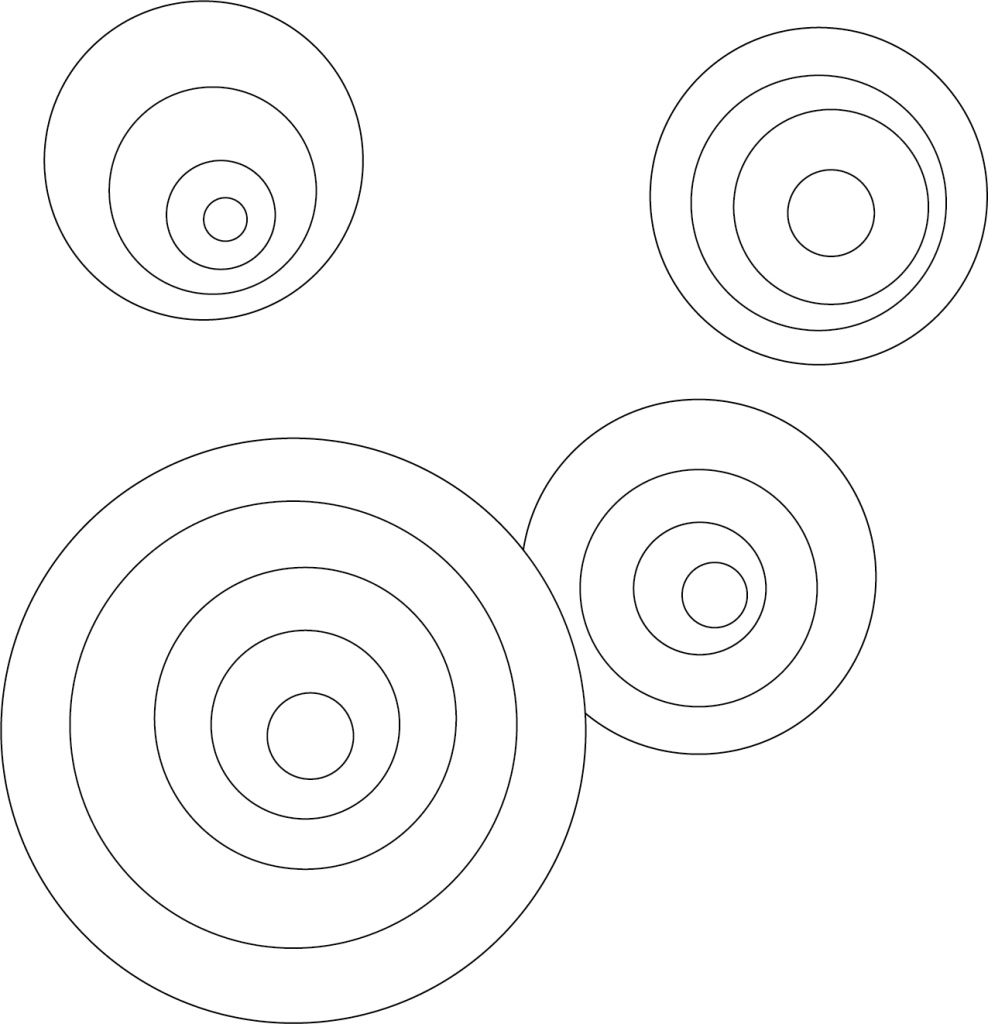
For the final project, I want to create an animation that changes based on the way that the user interacts with the screen. I want to specifically create ripples in water that mimic actual ripples in water.

I will also specifically work to create a strong flat graphic visualization with those, and create a strong graphic look. The ripples will form when the user clicks on the screen and ripple out a random amount, and depending on where the user clicks that spacing of the ripples will be different. The types of colors that the ripples form in will also depend on where the user clicks on the screen. These ripples will also fade out in the manner that ripples do in the water, based on a certain amount of time.

The background will also change slightly based on the position of the mouse, which will help create a different look.

Sketch of what the space looks like

Looking Outwards 12 Ellan Suder

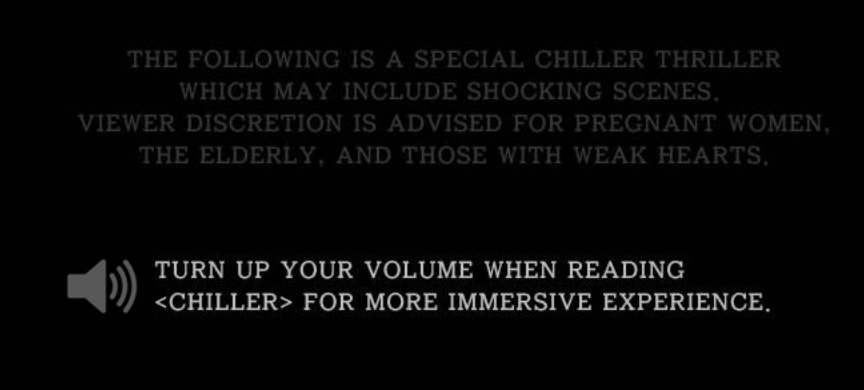
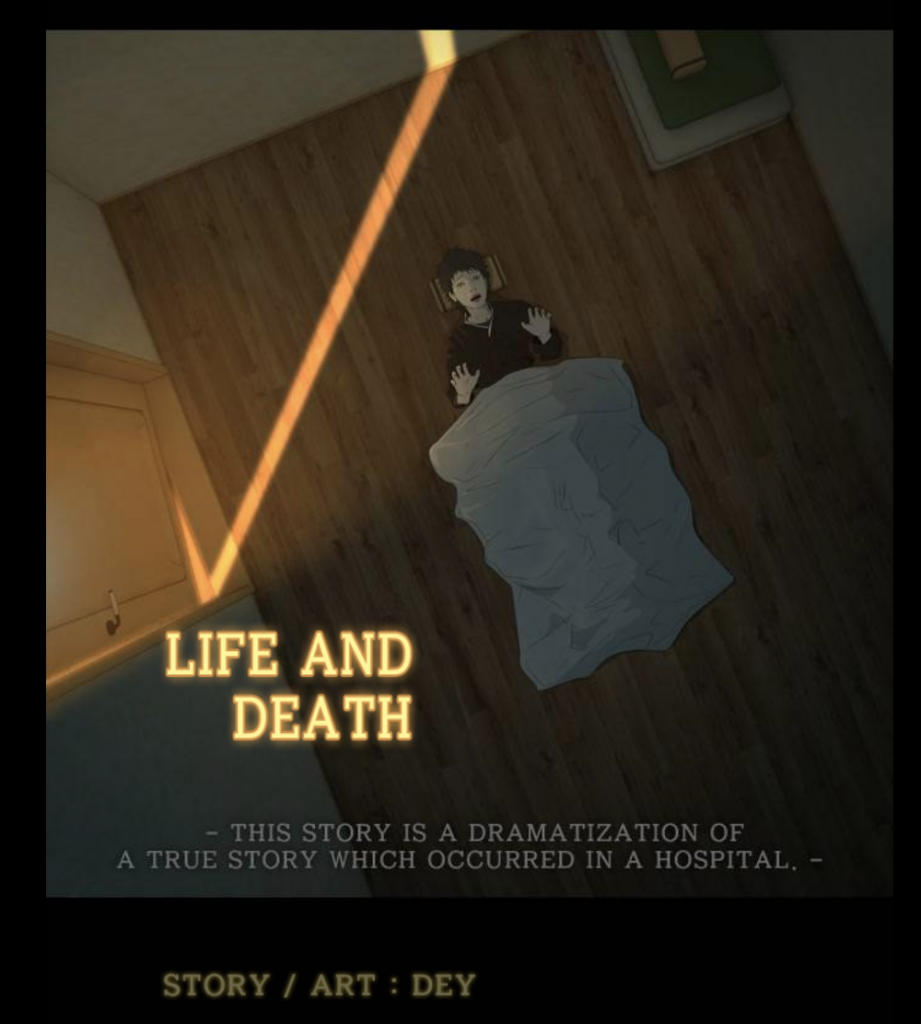
When searching for motion comics, I found this scrolling style comic — it is a compilation of animated horror comics called “Chiller” (2015) by several different artists. It uses the scroll to trigger the effects.

Music starts to play when you scroll to this part and the title appears

I think this is a really interesting way to adapt horror comics. It’s kind of a middle ground between regular static comics and horror video games, where it’s still linear but gives a little control to the reader. The reader controls the story instead of passively watching like they would for a horror movie. By including this interactivity in the reading experience, the reader is more immersed in the story and hopefully more susceptible to fear.

The sounds were the creepiest part of the comic for me because of how sudden they were, like auditory jumpscares. They added to the dread the reader feels when scrolling further down the page.

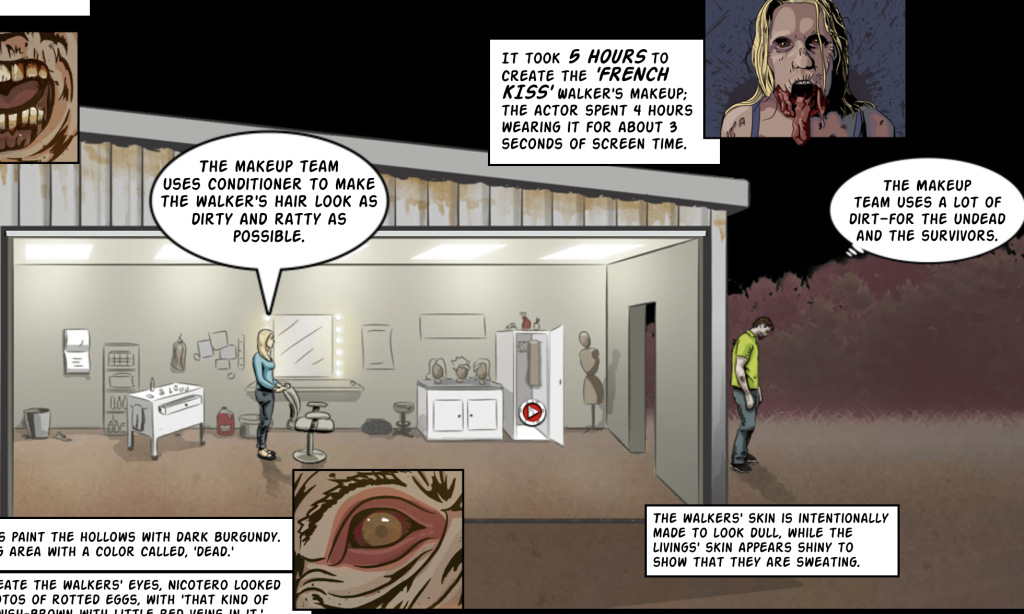
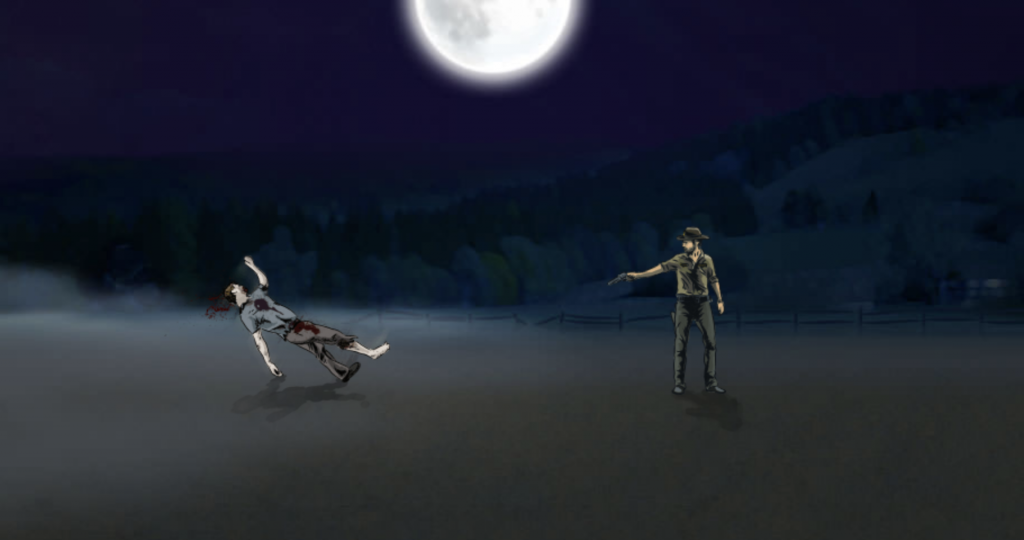
The second motion comic I found was also controlled by scrolling, but this time it moved horizontally. The comic is an informational comic about The Walking Dead’s BTS makeup effects. Scrolling animates the character to make him walk forward through the buildings, where info about the show will appear. There are also clickable elements, play buttons for videos that reveal themselves as they scroll.

The play button in the closet doesn’t seem to be working unfortunately
You can scroll back and forth to make the animation play or reverse

It’s a really fun and interesting way to present information, as opposed to maybe an article or long video. The feature I liked most was the reversibility. Instead of the scroll triggering an effect and then ending there, the scroll was actually directly tied to the motion itself. So in the ending scene where the zombie is shot, you could control the animation frame by frame by scrolling.

Mihika Bansal – Looking Outwards – 12

For the final project I want to play with creating animations based on the manner in which the user interacts with the keyboard and the mouse. So I am looking specifically at artists that have interesting styles in the manner that they create work. The first project that I am looking at is by an artist: Carlos de Oliveira Junior. The project is a generative flower piece, and many of his works resemble this style of work. I think his usage of color and imagery is very strong which I find to be interesting.

The second artist I am looking at I Benedikt Gross. This artist is very interesting because he uses data to create specific interesting visualizations. It isn’t apparent that Oliveira uses specific data to create his visualizations, he just has a strong visual sense. The project by Gross that I think is particularly interesting is “All Roads Lead to Rome.”

486.713 routes to Rome, 120cm × 80cm, lambda print / interactive web map
All Roads lead to Rome Image

The project has a strong visual sense, but uses data and a space that people are familiar with to create an image and feeling.

So these are the two artists that I am interested in using as inspiration for my final project for this class.