rmanagad-proposal

Example of a recursive loading icon, posted by /u/Caybris on Reddit.

For my final project, I’d like to create a series of recursively-generated loading icons, following multiple stylistic variations. This is in-line with an exploration of communications design variables–specifically, how color and images can be used in a moving picture to engage and hold a viewer’s attention. This is important in liminal spaces such as loading screens, where visitors to a website or video need some visual component to tell them that progress is being made. A visually-engaging loading icon, like the above, would make the interstitial space between pages seem shorter.

In doing this, I’d like to explore different illustration methods–from existing on the three-dimensional plane to using p5js physics– that can be translated efficiently to Processing.


atraylor – Looking Outwards 12 – Section B

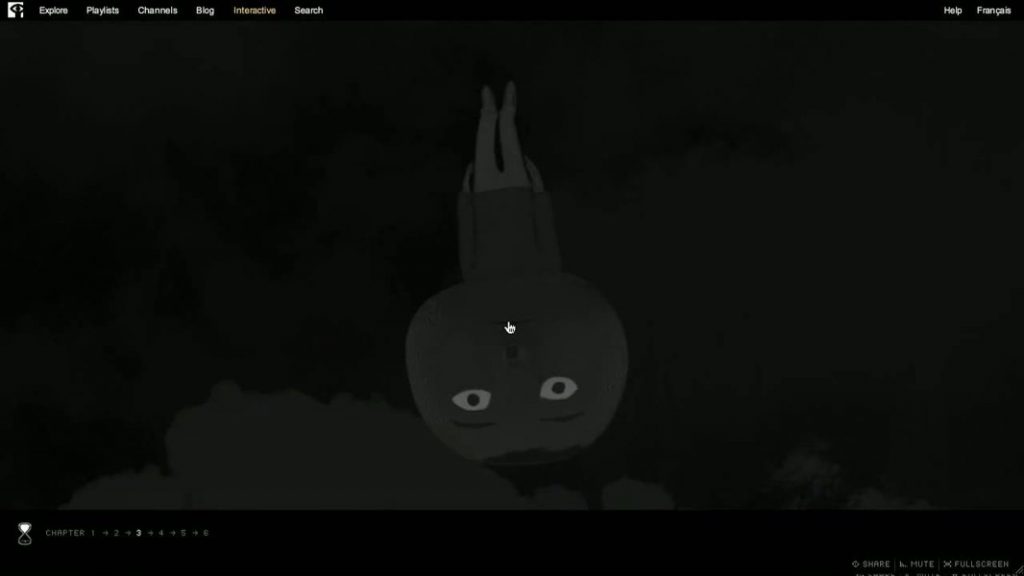
Two pieces that I’m inspired by are Blahblah by Vincent Morisset and JK Rowling’s old website from the 2000s (sadly it’s not up anymore, but here’s a link to a description). Blahblah is a “film for computer” and allows the viewer to interact with it and trigger events, but sometimes it’s hard to tell how much power the viewer has over the scenes. I admire that there is a clear direction and that it’s extremely engaging, and it is what the viewer makes it.

A still from Blabla

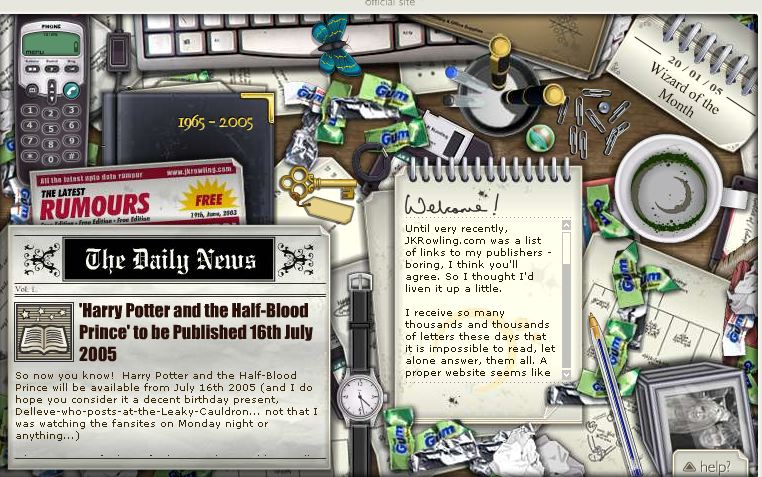
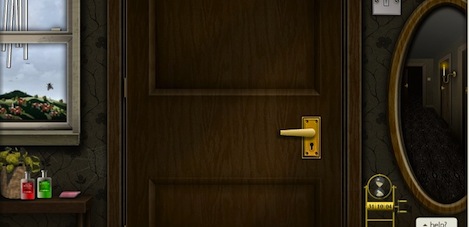
JK Rowling’s old website is similar and for a very different purpose. Her website was what you could discover in it. It started with her desk which had clickable objects that would take you somewhere where you could gather more information. One was a “room of requirement” like door that had different information or photos behind it depending on the day (which you could navigate to using a time turner).

I’m inspired by these projects because they use interactivity to explore ideas and information through directed narratives.


JK Rowling’s old website. Example of what the desk page looked like.
Interactive room example.


atraylor – Project Proposal – Section B

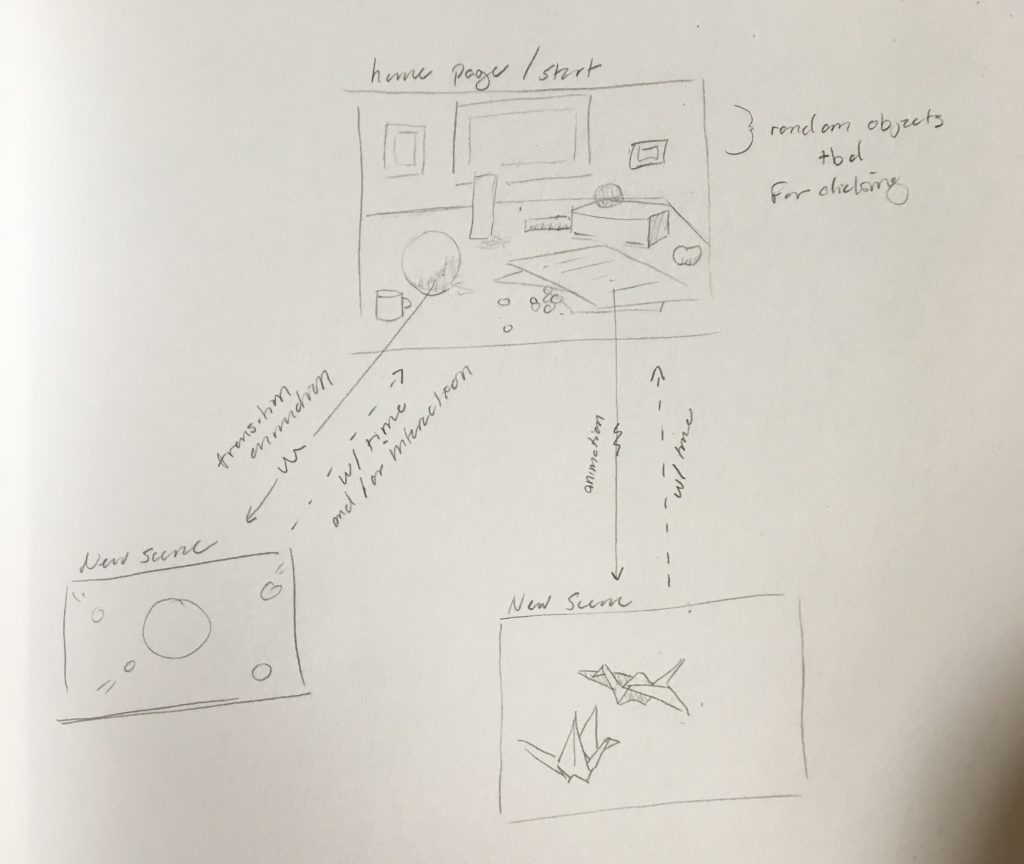
For my final project I want to make an interactive scene that isn’t exactly a game nor fully an animation. There will be a starting scene and by clicking on things in the scene it will change and trigger animation and sound. I’m also going to have these scenes be triggered by time as well. This way, user control is ambiguous. After each animation, the project will revert to the start scene.

I haven’t fully decided on the visuals, but I’m leaning towards using png files and creating a collage, rather than using p5 primitives to build imagery.

Through this project, I’m going to explore a simple narrative or premise through the use of imagery, sound, and interaction.

sntong-Looking Outwards 12: Project Priors and Precursors


One of the video overlays viewers can add throughout the video
Multiple layers can be added to the video at the same time by pressing multiple keys.

I came across two interactive website that is video based. The first project is LSD by Spencer Sheridan, that is a keyboard interactive music video for the band Busy Living. Viewers of the music video is able to add and overlay shapes, colors and videos onto the music video to create an unique visual experience every time the music video is played (check out the music video here).

This experiment lets you play your keyboard like an instrument to overlay colors and images to create your own music video, and I am interested in creating an unique experience to a short video.

The second example provides mouse interaction of the user on the page to generate music. GeoSound is a webpage By Yanlin Ma that generates sound through geometric object collision. It provides an interesting way to allow people to make sound and contribute to the sound they are experiencing.

Drag and drop objects to create random collisions and make sound


alchan-Looking Outwards 12

For my final project I’m probably going to create a game (with Maddy Cha) along the lines of interactive fiction/ visual novels.

Kentucky Route Zero Act I, 2013, by Cardboard Computer

The first relevant project is Kentucky Route Zero, one of my favorite games. It’s being developed by Cardboard Computer, a small indie studio releasing the game in 5 acts (the 1st act was released in 2013, and the 5th act is supposed to come out in early 2018). It’s a magical-realist adventure game inspired by point-and-click games & interactive fiction, but with a heavy focus on characters and mood.  It’s essentially a winding interactive story. I really admire this focus, especially compared to more combat- or puzzle-oriented “traditional” video games. While we’re definitely not going to attempt something this ambitious (or in a similar storytelling genre), I really like how the game handles story and text.

overview of the latest version of Twine

The second project is Twine. It was originally created by Chris Klimas in 2009, but its development has since been open-sourced and is now maintained by several other people. It’s a tool meant to make the creation of interactive fiction accessible, essentially generating a series of hyperlinked HTML pages at its simplest. Games or fiction created with twine are thus easily customizable since they can be extended with Javascript, CSS, or any number of other possibilities. I admire Twine since it radically simplifies the process of making a story (as simple as writing passages and connecting them), and makes it easy to visualize the game/ story as a whole. P5 doesn’t really have the option of hyperlinks, but the idea of branching storylines and keeping track of past choices definitely applies to what we’d like to do.


kyungak-lookingoutwards-12

(Jason Rohrer, “Inside a Star-Filled Sky”, 2011)

https://www.artsy.net/article/artsy-editorial-are-video-games-art

Jason Rohrer is a computer programmer and a game designer that not only produces games for its original purpose, but also as art. He codes creative games that are usually sold and played in the public domain, but also combines a series of them to exhibit as art works. Most shame came from the public who thought that games could not be art. However, Rohrer still believed them as artworks because creation of games was no different from painting to him. When I saw his works, I was inspired to create something similar to the pieces in his exhibitions. Similar to the format of the Pac man game, I wanted to have vivid graphics but a simple mechanism that kept the game running. Rohrer’s games and visuals were a great inspiration for me.

(Jenova Chen, “Flower”, 2009)

http://jenovachen.info/flower/

Jenova Chen is the designer of the playstation game, “Flower” that was released in 2009. Although this game is an actual game, it is largely considered as an art work for its aesthetic value. The interaction of the game with the players isn’t about winning or competing for a prize. The wander and exploration through the landscapes and the stunning visuals were the initial goals of this game. As visuals are important for the final project I’m planning, I wanted to get inspirations from the way she portrayed her objects. Her project was beautiful.


jennyzha – looking outwards 12

For looking outwards 12 I already decided the type of projects I was looking for since I was relatively set on what I wanted to be my final project – an interactive digital coloring book.

http://whichlight.com/

First in my search, I found “whichlight,” who focuses in interactive and technical art. His passion, however, is something that comes across extremely clear not only in his work but in his about me statement: “I make media and products that invite people to be expressive, playful, and creative.” It was this optimism and happiness so clear in his work that I was drawn to his work and that further inspired my own idea.
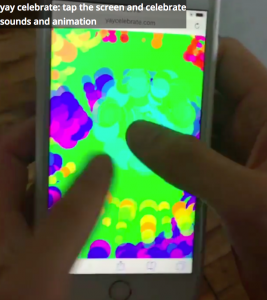
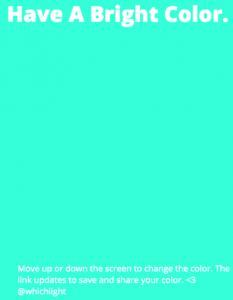
His projects are playful, colorful, interactive, and just make people happy – exactly what I want for my project. Nonetheless, one thing I realized from viewing his projects is that there isn’t much purpose, but rather they are generally fun things to do while passing the time. Maybe adding some kind of “goal” in his projects would help drive more usage?

http://www.nanikawa.com/projects/everygallery 

The second project I found interesting was by a company called Nanika, “founded with the aim to explore interaction between man and machine beyond traditional input and output.” Of their collection, the EveryGallery project for Nokia was one of my favorites.
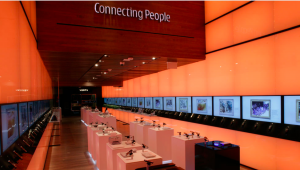
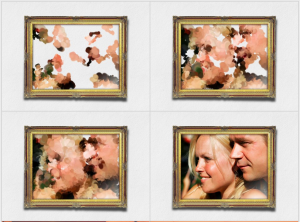
The idea was mixing the old with the new, framing digitally rendered photos with antique-esque frames to complement each other. While the the idea behind it was beautiful, what I found great about the project was actually the technique of brushstrokes. It sparked an idea for my own project of varying brush strokes somehow, making the process more independent for the user and to have more range in final project. Additionally, I think something Nanika could have incorporated more was the end user, possibly having pictures of them drawn instead of a pre-made stranger.


dnam-LookingOutwards-12

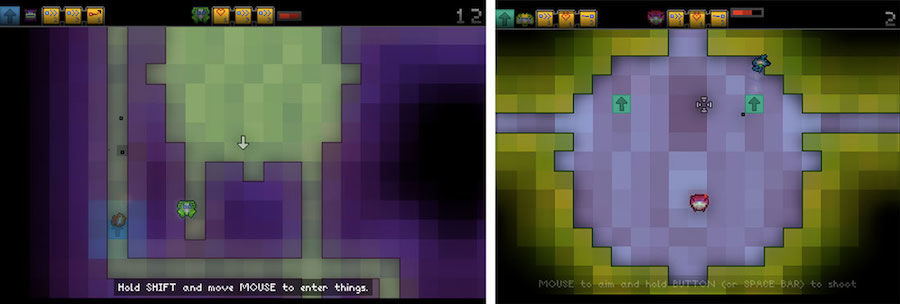
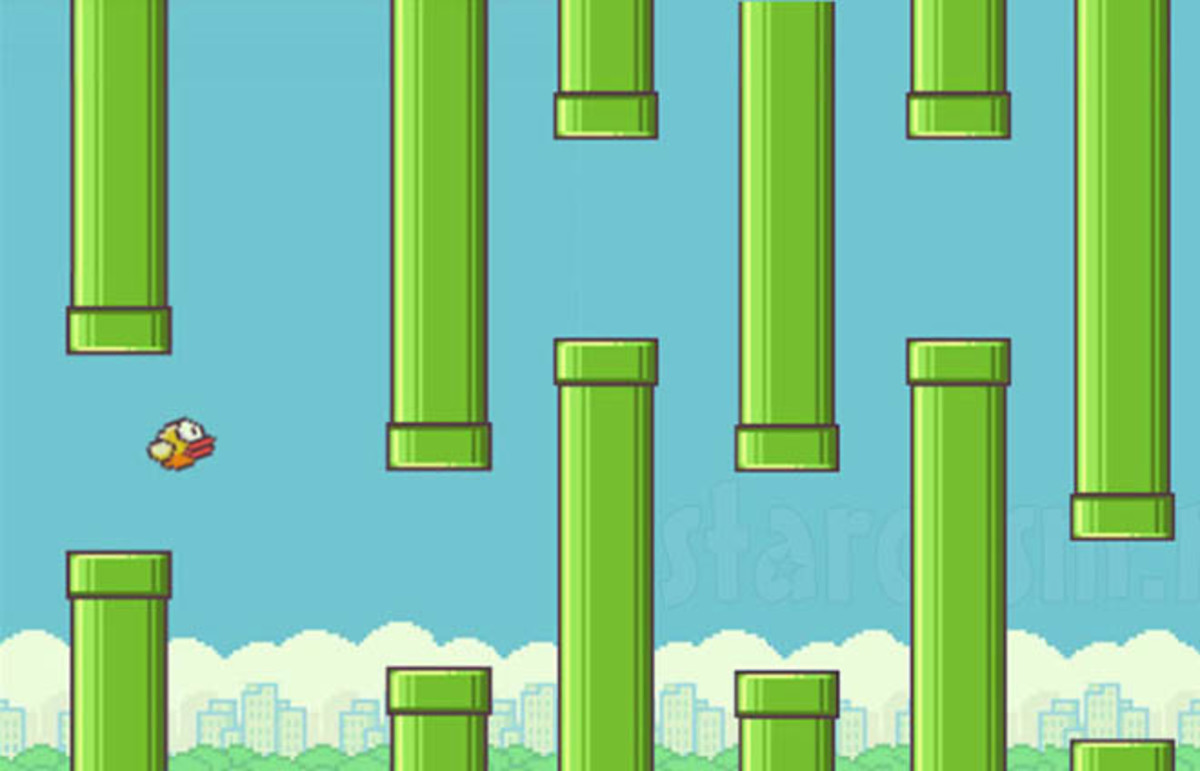
As I plan to work on an interactive pixel game, I looked at two popular games that I personally have played before: Fez designed by Phil Fish and Flappy Bird developed by dotGears.

Flappy Bird

Fez

The games definitely have their similarities. The obvious trait being the use of pixel art on both projects. The games both also create a character that is easily recognised by the audience. However, Flappy Bird can be seen as a much more simple game. While Fez requires the player to crack the puzzles by utilizing 3D-space in a 2D game world to find loops and holes, Flappy Bird only requires people to do one task of not hitting the pipes. Still, both games are challenges to their players. I look forward to creating a game of a similar caliber with a lovable character.

jennyzha – Project 12

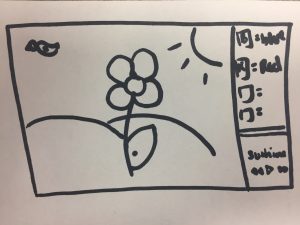
For my final project I plan on making an interactive digital coloring book. This coloring book will feature a playlist based on the picture (happier music for happier scenes, calmer music for calmer scenes, etc.). The program would generate a different picture every time the user refreshed the page and then the user would have the option to change the color of their brush based (possibly?) a key stroke (b = blue, r = red, etc.) or possibly have them just be filled in based on the original image’s color. Having a strong passion for music and art, I think I will have a lot of fun with this project, choosing pictures, matching music, and overall creating a fun program to use.

yoonyouk-project12-proposal

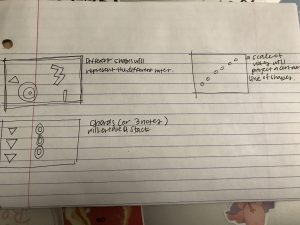
Initial sketch iterations

For my project, I wanted to create a piano keyboard using the the keyboard of the computer. By pressing different keys, a different note will be played. To accompany these notes, I wanted to add different patterns, shapes, and colors. If chord, or multiple keys are played at the same time, then different patterns will be drawn. I am still deciding whether I want this to be an actual keyboard where a user will hit the keys, or use a piano song and generate the shapes according to those notes. When the keys are played I want to make the background so that the colors adjust the background and maybe even the appearing shapes.

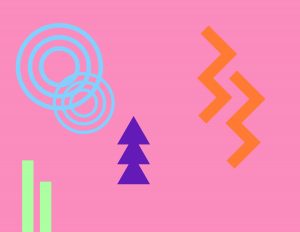
Possible composition of shapes on the screen

With this project, I want to play around with how the shapes will appear on the screen not simply just pop out. Preferably, I would like them to draw out on the screen or transition through opacities. I also need to consider how the shapes will be placed on the screen according to the other shapes and not have everything simply merge together on a single screen.