monicah1-project-12-SectionA


I am interested in allowing people to question the reality.  What make one thinks the object is real or not. There are many existing things in our daily spaces that are invisible to our five senses: sight, hearing, touch, smell, taste. Sometimes one can so blinded by one’s thoughts and the reality that the society create. How can one be encouraged to see beyond the curated reality, focusing on seeing and feeling the true forms.

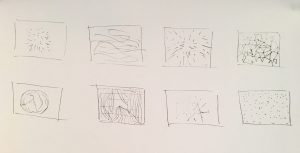
I am interested in creating a mix of 2D and 3D animation with particles and elements in space. Elements may be: strings, lines, dots, cubes, cylinders and such. Then, using these elements to create motions like: distortion, explosion, tension, and more. I want to connects the motions and flow of each scenes. Considering the sense of visual complexity can be delicate and intricate, how do I make complex elements in motion visually pleasing and soothing. Adding on the visual animation, I would want to add on sound affects.

monicah1-lookingoutward-12-SectionA

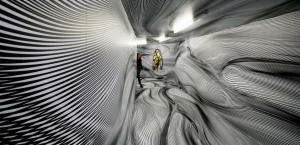
o.T., Astana Contemporary Art Center, Artists & Robots, 2017


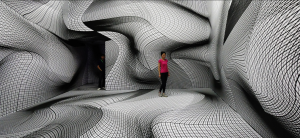
Galerie Mitterrand, Paris, 2017


http://www.kogler.net/kunsthaus-bregenz-2000-projektion#

Peter Kogler, an Austrian artist, works on floors walls and ceilings with ling designs illusion for 30 years, bending spaces in unnatural ways. He manipulated box-shaped space to virtual maze of time and space. He creates undefined movement and sense of insecurity in spaces for people to experience in. He sees computer for artists as “liberated from many physical limitations of all former media”. He explores the new dimension in architecture.

I am interested in the idea of allowing people to question what is real and what is not. what is important and what is not. What values do we hold on. Human can be manipulated with visual easily, we only think what the normal spaces are like based on what we are used to. If we exposed to more of what diverse perspective spaces, will we be comfortable in those spaces one day?

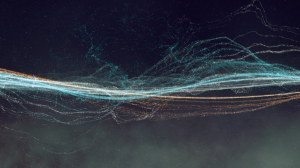
‘Oscillate’ – Thesis Animation of Sine Waves by Daniel Sierra 2015

Sierra is a digital artists, designer, and creative coder who specializes in audio visualization, animation, and mixed reality experiences. In Oscillate, he was interested in the emergence of complexity in sound from fundamental sine and cosine waves, using tools like Houdini, Reason, Nuke, After Effects, and Processing.

In Oscillate, I am intrigued by how he presented the elements in we encounter daily to this delicate form. Moreover, he added on his own audio sound design to the original visualized sound elements. The splashes, strings, and lines create a great tension in between.

I liked how Peter Kogler and Daniel Sierra play with 2D and 3D with natural elements in space, giving the sense of mysteriousness and delicacy.

Project 12 – Space Explorer

I am interested in creating an animation or a game that is interactive based on Key inputs. The theme and visual that I am interested in is Sci-Fi theme. The exploration of the space and futuristic image is what I want to convey for this project.  I imagine that Ultimate goal would be a interactive game/ animation that explore through the stars and character moving inside the space ship, and may be possible to change the scene to a planet with discovery and move around in different scene(planet).

Main focus of the project I want to convey is the beautiful space inside the space ship and the feeling of adventure. I do not expect myself to be able to code the whole game concept with change of scene, but my focus is on the traveling in space and convey the beauty.

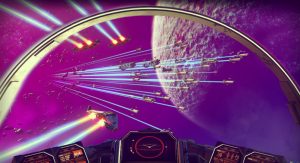
I imagine that travel phase will be close to image below and change of scene probably based on time or travel speed.

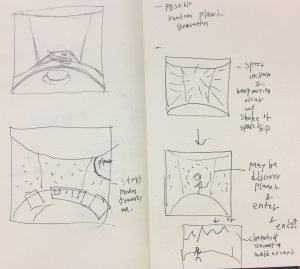
Below is a concept sketch. I want this to start in space as ship travels then tells the user how to accelerate the ship and may be encounter a planet and goes into the planet. If I can figure out the change of scene and animation inside the planet, game will continue to phase where you can see the moving character, if not it will fade out with planet approaching.


Looking outwards 12

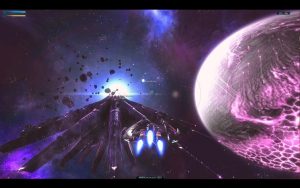
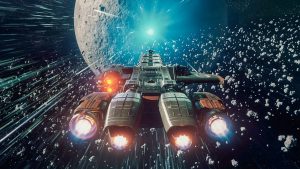
Following images are from games: Galaxy on Fire , and Star Citizens. These games are consisted of open world with the main story with a battle phase occurring through out the game. It is consist of adventure and beautiful space view  and creative illustration of planets, space ships, and alien cities.  Galaxy on Fire is mainly battle based game that takes place in outer space. It is a rather overly simplistic story for a game that shares similar genre to other space game that involves exploration and battle. Graphic is nice but the negative thing about the game is that travel between solar system was slow, battle was not tense enough to keep tension of game. Only attracting facts of the game was the graphic; in contrast, Star citizens is a more open world based game, which is close to MMO RPG in space. This game is still in the process of development, but early access are available, and they propose a interesting dynamic of game plays with overwhelming graphics.

My main project will be close to convey similar exploration feeling of the beautiful space and interactivity with user/player.

mmiller5-Project-12

For my Final Project, I’d like to create a multiplayer asymmetric cooperation visual novel-ish game.  Breaking that down, I want to make a 2-player game (where each player uses a different computer) that gives each player a different experience and requires them to work together to advance, presented mainly via text with some possible image interaction.

Requirements: 1- 2 player functionality;2- Different events for each player;3-  Text presentation;4- Player inputs

To accomplish the 2 player functionality, since I won’t be able to create some type of pipeline that actually allows each players’ game to interact with one another, the game will, at the start, ask the player to be either Player 1 or Player 2, with different events being displayed throughout the game depending on which player they chose.  The events of each player will then work as a sort of manual for solving the puzzles/tasks of the other player’s events, and vice versa.  To make sure each player is paced at about the same speed through the game, I could implement text that auto continues to compensate for different reading speeds, or I could implement “stop” screens that tell players to not continue until both players are ready.

For the text presentation, minimally, I could just have the text appear on screen and then change either after the player clicks or after a set amount of time.  What I would prefer to do, however, is have the text “write itself out” one letter at a time and accompany that with a little writing sound effect, but I don’t know how difficult that would be to implement.

For player inputs, I’m currently thinking of dialogue options, where multiple choices would be presented on screen and the player would need to choose the correct one or incur a penalty.  I’m thinking of also accompanying this with a visible timer-bar that shortens as time passes, giving the player limited time to communicate with their partner to find the right answer.  Depending on how this goes, I might implement more ways to interact with the system.
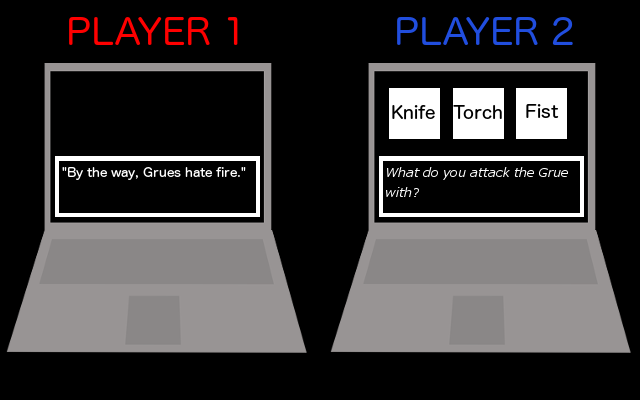

Example of what it might kinda look like

I know this might sound like a lot, and maybe it is, but I’m pretty confident that I can do this, or at least a proof-of-concept that’s a few minutes. (also sorry that this is more than 200 words; I’m also using this just to get my ideas written down)

mmiller5-Looking Outwards-12

This week, I’ll be looking at two games that focus on multiplayer asymmetric cooperation: We Were Here — released by Total Mayhem Games in 2017–, and Keep Talking and Nobody Explodes — released by Steel Crate Games in 2015.  The reason as to why I’m looking at these projects is because I want to make a multiplayer asymmetric cooperation game for my final project.  What these games have in common is that there are essentially two roles that different players take on before the game starts, and the role of one player is to help the other player complete tasks by providing them with information.

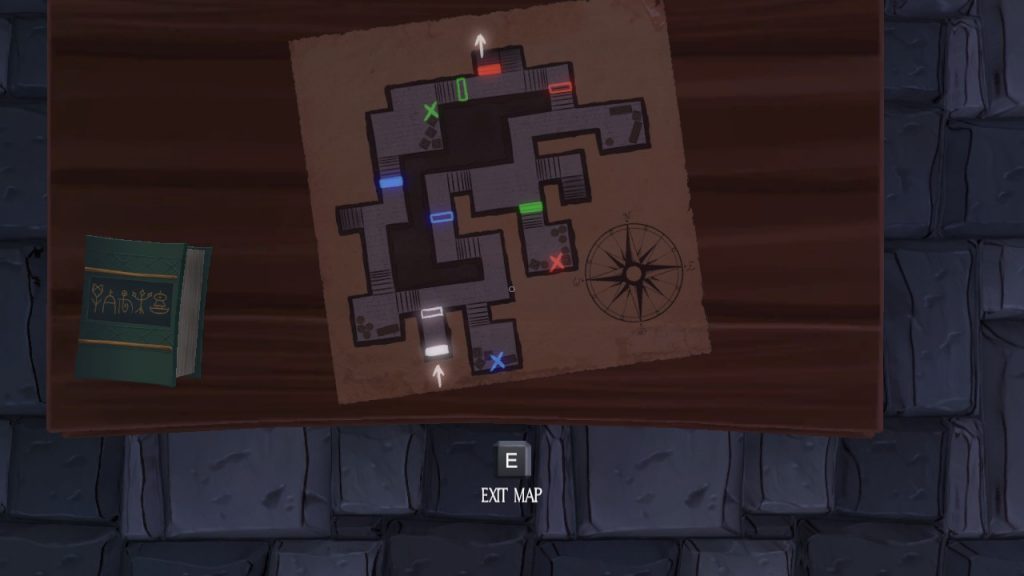
In We Were Here, each player is a character in different sections of an arctic castle, and one player travels from room to room encountering new puzzles that they need the help of the other player, who travels from room to room looking for clues, to solve.

Example of a clue one player needs to relay to the other

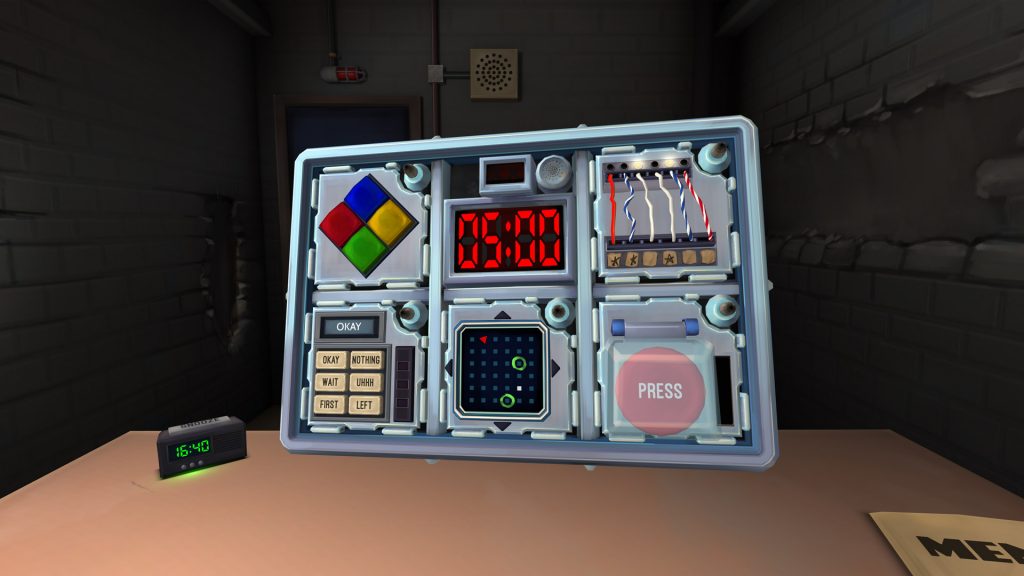
In Keep Talking and Nobody Explodes, one player is tasked with disarming a bomb while the other player is given a bomb-defusal manual that has the information needed to disarm it.

Example of a bomb with different modules that must be defused

In both projects, one player is generally in danger while the other gives information to save that player; however, I think there may be a missed opportunity where both players simultaneously fulfill both roles, one where they must solve tasks as well as one where they must provide info to their partner.

mjeong1-Project-11-Section A

sketch

function turtleLeft(d) {
    this.angle -= d;
}


function turtleRight(d) {
    this.angle += d;
}


function turtleForward(p) {
    var rad = radians(this.angle);
    var newx = this.x + cos(rad) * p;
    var newy = this.y + sin(rad) * p;
    this.goto(newx, newy);
}


function turtleBack(p) {
    this.forward(-p);
}


function turtlePenDown() {
    this.penIsDown = true;
}


function turtlePenUp() {
    this.penIsDown = false;
}


function turtleGoTo(x, y) {
    if (this.penIsDown) {
      stroke(this.color);
      strokeWeight(this.weight);
      line(this.x, this.y, x, y);
    }
    this.x = x;
    this.y = y;
}


function turtleDistTo(x, y) {
    return sqrt(sq(this.x - x) + sq(this.y - y));
}


function turtleAngleTo(x, y) {
    var absAngle = degrees(atan2(y - this.y, x - this.x));
    var angle = ((absAngle - this.angle) + 360) % 360.0;
    return angle;
}


function turtleTurnToward(x, y, d) {
    var angle = this.angleTo(x, y);
    if (angle < 180) {
        this.angle += d;
    } else {
        this.angle -= d;
    }
}


function turtleSetColor(c) {
    this.color = c;
}


function turtleSetWeight(w) {
    this.weight = w;
}


function turtleFace(angle) {
    this.angle = angle;
}


function makeTurtle(tx, ty) {
    var turtle = {x: tx, y: ty,
                  angle: 0.0, 
                  penIsDown: true,
                  color: color(128),
                  weight: 1,
                  left: turtleLeft, right: turtleRight,
                  forward: turtleForward, back: turtleBack,
                  penDown: turtlePenDown, penUp: turtlePenUp,
                  goto: turtleGoTo, angleto: turtleAngleTo,
                  turnToward: turtleTurnToward,
                  distanceTo: turtleDistTo, angleTo: turtleAngleTo,
                  setColor: turtleSetColor, setWeight: turtleSetWeight,
                  face: turtleFace};
    return turtle;
}

var positionx = [];
var positiony = [];
function setup() {
  createCanvas(480,480);
  background(255,0,0,100);

}
function draw() {
  for (var x=0; x<positionx
  .length; x++){
    var turtle = makeTurtle(positionx[x], positiony[x]);
  turtle.setColor(random(100));
    for (var i=0; i<20; i++) {
        turtle.penDown();
        turtle.forward(random(60),100);
        turtle.right(141.5);
        turtle.forward(random(60));
      
      turtle.penUp();
      turtle.x = positionx[x];
      turtle.y = positiony[x];
    }
  }
}

function mousePressed(){ 
  positionx.push(mouseX);
  positiony.push(mouseY);
}

For this assignment I wanted to create interactive art work using turtle graphics. For each mouse click, new geometry will appear with glittery effect created by random command.

mjeong1-Looking Outwards-11-Section A

“Bicycle for Two” by Max Mathews(1962)

Max Mathew is one of the early pioneers of Computer Music. He studied electrical engineering at California Institute of Technology and MIT. He developed Graphic 1, an interactive graphic sound system on which one could draw figure with light pen which can be converted into sound. This simplified the process of composing computer generated music. He also developed GROOVE, a first fully developed music synthesis system for interactive composition and realtime performance using 3C/Honeywell minicomputers. Through his inventions, he showed his admiration to live performance and his interest in what a computer can do to aid a performer. He made a controller, the Radio-Baton, to provide new ways for interpreting and performing traditional scores.

“Daisy Bell” is the most famous music composed by Mathews. In 1961,  He arranged accompaniment of the song by computer synthesized human voice through technology developed by John Kelly. My favorite music composed by Max is “Bicycle for two” because it has simple melody and rhythm that I enjoyed and I admire how Max use computer software to generate music based on compositional algorithm.


link to max mathews


rmanagad-lookingoutwards12-sectione

Project One: Spotify – Pride Stories by Studio Giant Ant

Year of Creation: 2016

Link to Project Work: http://www.giantant.ca/spotify-pride-stories

Link to Creator Bio:http://www.giantant.ca/about/

—–

Project Two: Most Female and Male Occupations Since 1950 by Flowing Information

Year of Creation: 2016

Link to Project Work: http://flowingdata.com/2017/09/11/most-female-and-male-occupations-since-1950/

Link to Creator Bio: http://flowingdata.com/


The two projects I chose to compare for my final Looking Outwards take two different approaches in delivering messages to audiences — both, however, are rooted in computational media, with varying degrees of computation usage.

Pride Stories

Giant Ant’s Spotify Pride Stories is an information visualization-animation discussing the role of same-sex marriage laws in the workplace, and the lifestyles of stakeholders tied to those laws. It uses primarily Adobe Illustrator and Adobe AfterEffects to tell a story with their information, and uses computationally-derived data to form infographics on specific moments within the animation.

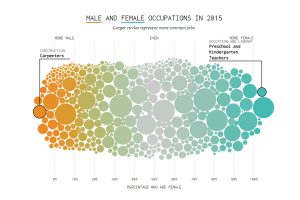
Male and Female Occupations

In comparison, Flowing Data’s Most Female and Male Occupations Since 1950 is a static infographic running on javascript and HTML/CSS that encourages user interaction through mouse-hover. Viewers are introduced to the topic of gender in the workplace through a gradient visualization, which they can experience for themselves by placing their cursor over different areas within the inforgraphic.

As a set, these two projects represent approaches to design that I’m very invested in — animation, world-building, and information delivery.

dayoungl Looking Outwards-11

For this week’s looking outwards, I looked into a concept of computer orchestra. The computer orchestra was created by group of students from ECAL, which stands for the University of Art and Design of Lausanne, Switzerland in 2013. What is interesting about their project is that the compute orchestra is not an orchestra based on computer generated sound but sounds that users upload to a server that’s later integrated into a form of an orchestra. Just like any other human orchestra, there is a conductor (a person) and musicians (computers). Rather than describing it in words, It’s really easier to understand the concept when you look at the attached video above. The way that the voices uploaded to the server is played according to gestures of the conductor; of course, conductor’s gestures are programmed accordingly and conductor can control so many aspects of the orchestra just by using his or her body. The students programmed the computer orchestra using Processing, SimpleOpenNi, and Ableton Live. On their website, they also specified that they used 10-12 computers, tripods, and Kinect.

Computer Orchestra is an interactive installation consisting of multiple computers. Close to a configuration of a classical orchestra, it proposes a new approach to music by allowing the user to conduct his/her own orchestra.

Movements of his/her hands are recognized accurately with a Kinect motion controller connected to a central computer. It will then give instructions to a multitude of musician screens. Screen-musicians then not only send sounds back to the conductor but also produce visual feedback.