Looking-Outwards 11 Thomas Wrabetz

I’m doing sound art now because I did Ronald Jenkees during the sound art week

“Journey into Hyperland” is a sound art experience that brings a crucial element of the musician’s world- the crazy acid trip- directly to your domestic screen. It’s parametrically generated which means it draws upon variables such as the user’s location and time of day. If you let it use your mic it can generate more stuff, which is kind of interesting although I didn’t see any tangible reaction to my sounds. In any case, the title does not lie as this work is hype to the max. There was also an elephant, so clearly the author’s animal selection abilities are as powerful as his programming skills. It’s like browsing around google earth when you’re bored except instead of the earth it’s a psychedelic EDM swamp with elephants and flying submarines.

Project 11 Thomas Wrabetz

sketch

//Thomas Wrabetz
//Section C
//twrabetz@andrew.cmu.edu
//Project-11

function turtleLeft(d) {
    this.angle -= d;
}
  
function turtleRight(d) {
    this.angle += d;
}
 
 
function turtleForward(p) {
    var rad = radians(this.angle);
    var newx = this.x + cos(rad) * p;
    var newy = this.y + sin(rad) * p;
    this.goto(newx, newy);
}
 
 
function turtleBack(p) {
    this.forward(-p);
}
 
 
function turtlePenDown() {
    this.penIsDown = true;
}
 
 
function turtlePenUp() {
    this.penIsDown = false;
}
 
 
function turtleGoTo(x, y) {
    if (this.penIsDown) {
      stroke(this.color);
      strokeWeight(this.weight);
      line(this.x, this.y, x, y);
    }
    this.x = x;
    this.y = y;
}
 
 
function turtleDistTo(x, y) {
    return sqrt(sq(this.x - x) + sq(this.y - y));
}
 
 
function turtleAngleTo(x, y) {
    var absAngle = degrees(atan2(y - this.y, x - this.x));
    var angle = ((absAngle - this.angle) + 360) % 360.0;
    return angle;
}
 
 
function turtleTurnToward(x, y, d) {
    var angle = this.angleTo(x, y);
    if (angle < 180) {
        this.angle += d;
    } else {
        this.angle -= d;
    }
}
 
 
function turtleSetColor(c) {
    this.color = c;
}
 
 
function turtleSetWeight(w) {
    this.weight = w;
}
 
 
function turtleFace(angle) {
    this.angle = angle;
}
 
 
function makeTurtle(tx, ty) {
    var turtle = {x: tx, y: ty,
                  angle: 0.0, 
                  penIsDown: true,
                  color: color(128),
                  weight: 1,
                  left: turtleLeft, right: turtleRight,
                  forward: turtleForward, back: turtleBack,
                  penDown: turtlePenDown, penUp: turtlePenUp,
                  goto: turtleGoTo, angleto: turtleAngleTo,
                  turnToward: turtleTurnToward,
                  distanceTo: turtleDistTo, angleTo: turtleAngleTo,
                  setColor: turtleSetColor, setWeight: turtleSetWeight,
                  face: turtleFace};
    return turtle;
}

var turtle;


function setup()
{
    createCanvas( 480, 480 );
    background( 255 );
    turtle = makeTurtle( width / 2, height / 2 );
    turtle.penDown;
    turtle.setWeight( 3 );
    turtle.setColor(0,0,0);
}

var turtleDist = 100;
var turtleSpeed = 1;
var turtleAcceleration = 0.05;

function draw()
{
    turtle.forward( turtleSpeed );
    if( dist( turtle.x, turtle.y, mouseX, mouseY ) < turtleDist) turtleSpeed += turtleAcceleration;
    else turtleSpeed -= turtleAcceleration * 2;
    turtleDist = dist( turtle.x, turtle.y, mouseX, mouseY );
    if( turtleSpeed < 0 )
    {
        turtle.left( 180 );
        turtleSpeed = -turtleSpeed;
    }
    turtle.turnToward( mouseX, mouseY, 7 );
    
}

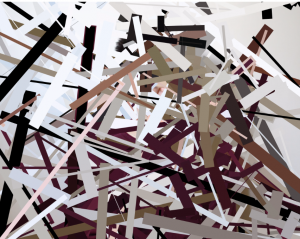
It’s a turtle that chases you down.

HaeWanPark-LookingOutwards-11

Iamus by Iamus

Iamus is a computer in the University of Málaga that composes contemporary classical music without any human help. Its first studio album ‘Iamus’ was released in 2012. This album was composed by only a computer and recorded and played by London Symphony Orchestra. This album is composed utilizing ‘melodics’ which is a computational system based on bioinspired algorithm generating musical composition without human input. Also, Iamus evolves composition in itself.

I was surprised that this computer composes full pieces of complex classical music not just a piece of some melodies. Because it is so good at composing music without human input, people can easily think that computer would replace human musicians in the future. But, it also might be a really nice tool for human musicians to develop a new musical invention.


Iamus

haewanp – Project 11 – Playing with your Turtle

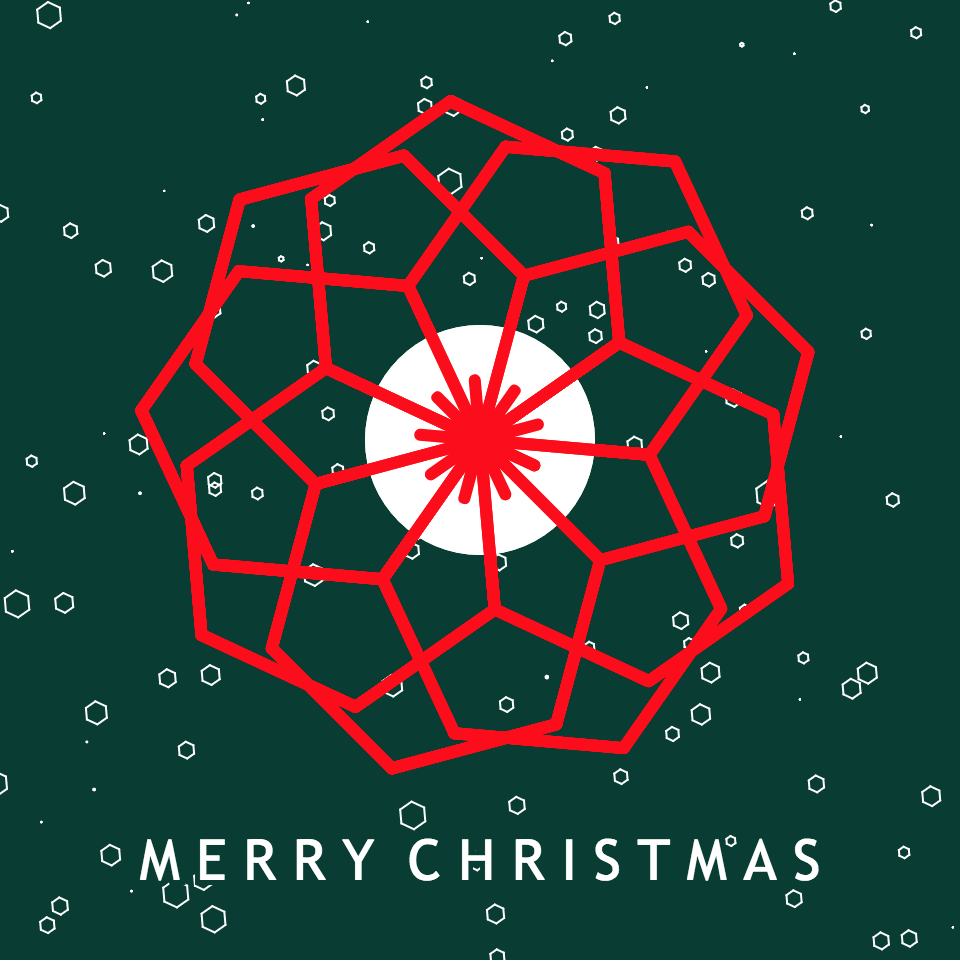
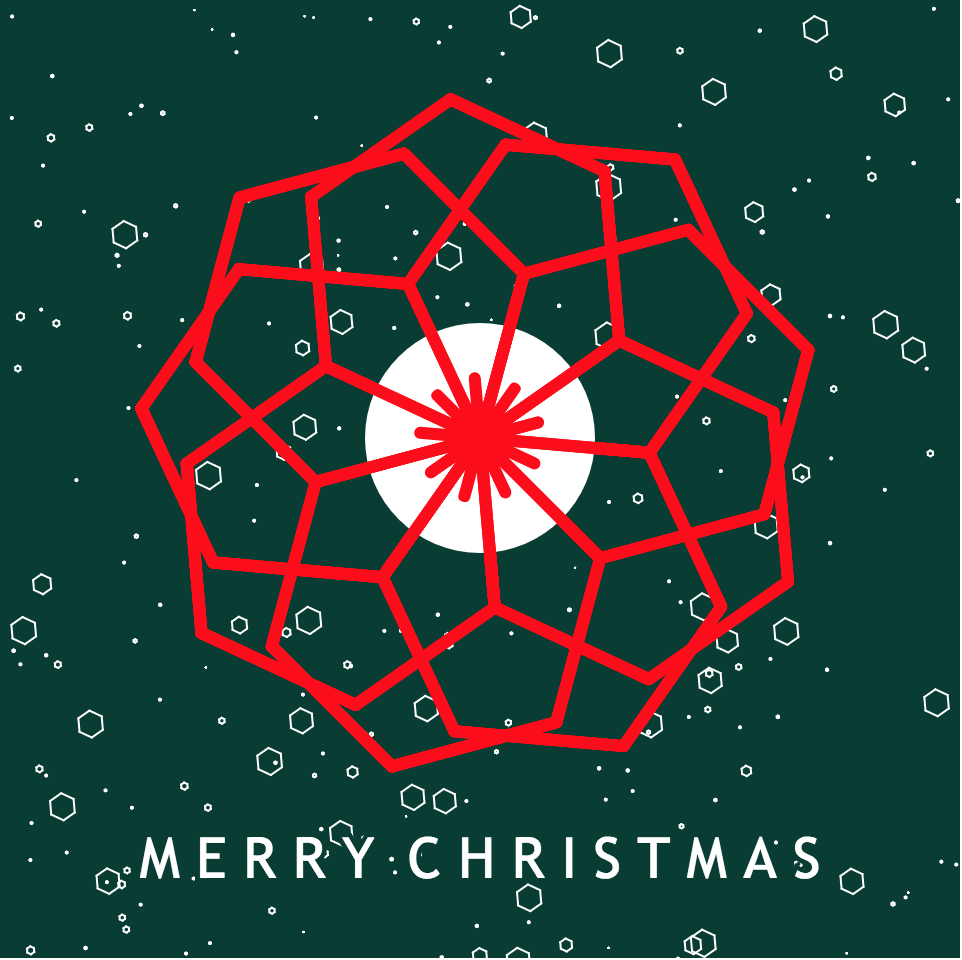
Merry Christmas

var myTurtle;
var num;
var length = 20;

function setup() {
    createCanvas(480, 480);
    background(5, 60, 50);
    myTurtle = makeTurtle(width/2, height/2);
    flower(40);
}

function flower(angle) { //draw red flower
    for (j = 0; j <= 360/angle; j++) {
        myTurtle.penDown();
        myTurtle.x = width/2;
        myTurtle.y = height/2 - 20;
        myTurtle.setColor((color(255, 0, 0)));
        myTurtle.setWeight(6);
        drawhex(85);
        myTurtle.back(30);
        myTurtle.right(angle);
        myTurtle.penUp();
    }
}

function drawhex(length) { //draw hexagon which is a part of flower
    for (i = 0; i < 6; i++) {
        myTurtle.forward(length);
        myTurtle.right(60);
    }
}

function draw() {
    //snow flakes
    myTurtle.penDown();
    myTurtle.setWeight(1);
    myTurtle.setColor(color(255));
    drawhex(mouseX/70);
    myTurtle.x = random(0, width);
    myTurtle.y = random(0, height);
    myTurtle.penUp();
    
}

function turtleLeft(d) {
    this.angle -= d;
}
 
 
function turtleRight(d) {
    this.angle += d;
}
 
 
function turtleForward(p) {
    var rad = radians(this.angle);
    var newx = this.x + cos(rad) * p;
    var newy = this.y + sin(rad) * p;
    this.goto(newx, newy);
}
 
 
function turtleBack(p) {
    this.forward(-p);
}
 
 
function turtlePenDown() {
    this.penIsDown = true;
}
 
 
function turtlePenUp() {
    this.penIsDown = false;
}
 
 
function turtleGoTo(x, y) {
    if (this.penIsDown) {
      stroke(this.color);
      strokeWeight(this.weight);
      line(this.x, this.y, x, y);
    }
    this.x = x;
    this.y = y;
}
 
 
function turtleDistTo(x, y) {
    return sqrt(sq(this.x - x) + sq(this.y - y));
}
 
 
function turtleAngleTo(x, y) {
    var absAngle = degrees(atan2(y - this.y, x - this.x));
    var angle = ((absAngle - this.angle) + 360) % 360.0;
    return angle;
}
 
 
function turtleTurnToward(x, y, d) {
    var angle = this.angleTo(x, y);
    if (angle < 180) {
        this.angle += d;
    } else {
        this.angle -= d;
    }
}
 
 
function turtleSetColor(c) {
    this.color = c;
}
 
 
function turtleSetWeight(w) {
    this.weight = w;
}
 
 
function turtleFace(angle) {
    this.angle = angle;
}
 
 
function makeTurtle(tx, ty) {
    var turtle = {x: tx, y: ty,
                  angle: 45, 
                  penIsDown: true,
                  color: color(255, 0, 0),
                  weight: 1,
                  left: turtleLeft, right: turtleRight,
                  forward: turtleForward, back: turtleBack,
                  penDown: turtlePenDown, penUp: turtlePenUp,
                  goto: turtleGoTo, angleto: turtleAngleTo,
                  turnToward: turtleTurnToward,
                  distanceTo: turtleDistTo, angleTo: turtleAngleTo,
                  setColor: turtleSetColor, setWeight: turtleSetWeight,
                  face: turtleFace};
    return turtle;
}

function mousePressed() {
    //it stops snowflakes
    noLoop();
    //draw ellipse
    fill(255);
    stroke(255);
    ellipse(width/2, height/2 - 20, 110, 110);
    //redraw red flower
    myTurtle.x = width/2;
    myTurtle.y = height/2;
    flower(40);
    stroke(5, 60, 50);
    //text
    textAlign(CENTER);
    textSize(28);
    strokeWeight(5);
    textFont('Trebuchet MS');
    text('M E R R Y  C H R I S T M A S', width/2, height - 40);
    
}

I made it because Christmas is coming! I created snowflakes and Christmas flower with multiple hexagons.

monicah1-lookingoutward-11-SectionA

While Sleeping by Ikue Mori 2013

Ikue Morie is a japanese artiest who moved from Tokyo to New York in 1977.  She started playing with drum, then formed a band creating radical rhythms and dissonant sounds. Then she started to used drum machine to improvise music.

I was intrigued by her perceive in music. This piece, While Sleeping, made me thought about what do I hear when I’m asleep or when I’m peace and calm states. How does she relate sounds while sleeping to the sounds she created. It is interesting that she used many mediums, some natural and some made up to create the subtle  music in While Sleeping .

monicah1-project-11-SectionA

sketch

//Monica Huang
//Section E
//monicah1@andrew.cmu.edu
//Project-11
var myTurtle;
var startFrame;

function setup() {
    createCanvas(400, 400);
    background(100);
    myTurtle = makeTurtle(width, height);
    myTurtle.setColor(color(255, 100, 200));
    myTurtle.setWeight(2); 
    myTurtle.penDown();
    resetCanvas();
    frameRate(50);
}

function draw() {
    var step = (frameCount - startFrame)/20.0;
    myTurtle.forward(step);
    myTurtle.left(10.0);
    if (myTurtle.y > height) resetCanvas();

}

function resetCanvas() {
    background(100,0,10);
    startFrame = frameCount;
    myTurtle.penUp();
    myTurtle.goto(width/6, height/2);
    myTurtle.penDown();
}

function mousePressed(){
    myTurtle.penUp();
    myTurtle.goto(width/2, height/2);
    myTurtle.penDown();
}

function turtleLeft(d){this.angle-=d;}function turtleRight(d){this.angle+=d;}
function turtleForward(p){var rad=radians(this.angle);var newx=this.x+cos(rad)*p;
var newy=this.y+sin(rad)*p;this.goto(newx,newy);}function turtleBack(p){
this.forward(-p);}function turtlePenDown(){this.penIsDown=true;}
function turtlePenUp(){this.penIsDown = false;}function turtleGoTo(x,y){
if(this.penIsDown){stroke(this.color);strokeWeight(this.weight);
line(this.x,this.y,x,y);}this.x = x;this.y = y;}function turtleDistTo(x,y){
return sqrt(sq(this.x-x)+sq(this.y-y));}function turtleAngleTo(x,y){
var absAngle=degrees(atan2(y-this.y,x-this.x));
var angle=((absAngle-this.angle)+360)%360.0;return angle;}
function turtleTurnToward(x,y,d){var angle = this.angleTo(x,y);if(angle< 180){
this.angle+=d;}else{this.angle-=d;}}function turtleSetColor(c){this.color=c;}
function turtleSetWeight(w){this.weight=w;}function turtleFace(angle){
this.angle = angle;}function makeTurtle(tx,ty){var turtle={x:tx,y:ty,
angle:0.0,penIsDown:true,color:color(128),weight:1,left:turtleLeft,
right:turtleRight,forward:turtleForward, back:turtleBack,penDown:turtlePenDown,
penUp:turtlePenUp,goto:turtleGoTo, angleto:turtleAngleTo,
turnToward:turtleTurnToward,distanceTo:turtleDistTo, angleTo:turtleAngleTo,
setColor:turtleSetColor, setWeight:turtleSetWeight,face:turtleFace};
return turtle;}

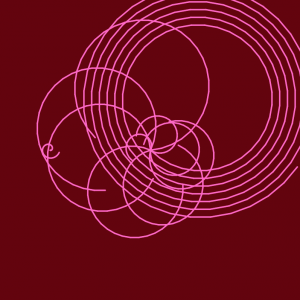
This piece I was playing with the tension of pattern and the randomness when interfere with the continuous flow of pattern.
//Monica Huang
//Section E
//monicah1@andrew.cmu.edu
//Project-11
var myTurtle;
var startFrame;

function setup() {
    createCanvas(400, 400);
    background(100);
    myTurtle = makeTurtle(width, height);
    myTurtle.setColor(color(255, 100, 200));
    myTurtle.setWeight(2); 
    myTurtle.penDown();
    resetCanvas();
    frameRate(50);
}

function draw() {
    var step = (frameCount - startFrame)/20.0;
    myTurtle.forward(step);
    myTurtle.left(10.0);
    if (myTurtle.y > height) resetCanvas();

}

function resetCanvas() {
    background(100,0,10);
    startFrame = frameCount;
    myTurtle.penUp();
    myTurtle.goto(width/6, height/2);
    myTurtle.penDown();
}

function mousePressed(){
    myTurtle.penUp();
    myTurtle.goto(width/2, height/2);
    myTurtle.penDown();
}

function turtleLeft(d){this.angle-=d;}function turtleRight(d){this.angle+=d;}
function turtleForward(p){var rad=radians(this.angle);var newx=this.x+cos(rad)*p;
var newy=this.y+sin(rad)*p;this.goto(newx,newy);}function turtleBack(p){
this.forward(-p);}function turtlePenDown(){this.penIsDown=true;}
function turtlePenUp(){this.penIsDown = false;}function turtleGoTo(x,y){
if(this.penIsDown){stroke(this.color);strokeWeight(this.weight);
line(this.x,this.y,x,y);}this.x = x;this.y = y;}function turtleDistTo(x,y){
return sqrt(sq(this.x-x)+sq(this.y-y));}function turtleAngleTo(x,y){
var absAngle=degrees(atan2(y-this.y,x-this.x));
var angle=((absAngle-this.angle)+360)%360.0;return angle;}
function turtleTurnToward(x,y,d){var angle = this.angleTo(x,y);if(angle< 180){
this.angle+=d;}else{this.angle-=d;}}function turtleSetColor(c){this.color=c;}
function turtleSetWeight(w){this.weight=w;}function turtleFace(angle){
this.angle = angle;}function makeTurtle(tx,ty){var turtle={x:tx,y:ty,
angle:0.0,penIsDown:true,color:color(128),weight:1,left:turtleLeft,
right:turtleRight,forward:turtleForward, back:turtleBack,penDown:turtlePenDown,
penUp:turtlePenUp,goto:turtleGoTo, angleto:turtleAngleTo,
turnToward:turtleTurnToward,distanceTo:turtleDistTo, angleTo:turtleAngleTo,
setColor:turtleSetColor, setWeight:turtleSetWeight,face:turtleFace};
return turtle;}


SaveSave

ghou-Project-11-Composition

sketch

//Grace Wanying Hou
//15-104 Section D
//ghou@andrew.cmu.edu
//Project 11

var turtle =[];
var count = 10;
var dp;


function preload(){
    var imageurl = "https://i.imgur.com/S483jxr.jpg";
    dp = loadImage(imageurl);//loading the pic of my boy friendo
}

function setup() {
    background(0);
    createCanvas(380,300);
    image(dp,0,0)
    dp.loadPixels();
    for (var i = 0; i < count; i ++) {//setup the strokes
        turtle[i] = makeTurtle(0, 0);
        turtle[i].penDown;
    }
    strokeJoin(MITER);
    strokeCap(PROJECT);
    frameRate(30);
}

function draw() {
    for (var i = 0; i < count; i ++) {
        var pointcolour = dp.get(floor(mouseX),floor(mouseY));
        turtle[i].setColor(color(pointcolour)); //setting the colour to the pixel at the mouse point
        turtle[i].setWeight(random(15));//randomizing the weight
        turtle[i].turnToward(mouseX,mouseY, turtle[0].angleTo(pmouseX, pmouseY)); //turn along mouse movement.
        turtle[i].forward(turtle[i].distanceTo(mouseX, mouseY));//move along mouse movement.
    }
}


//given turtle stuffs
function turtleLeft(d) {
    this.angle -= d;
}


function turtleRight(d) {
    this.angle += d;
}


function turtleForward(p) {
    var rad = radians(this.angle);
    var newx = this.x + cos(rad) * p;
    var newy = this.y + sin(rad) * p;
    this.goto(newx, newy);
}


function turtleBack(p) {
    this.forward(-p);
}


function turtlePenDown() {
    this.penIsDown = true;
}


function turtlePenUp() {
    this.penIsDown = false;
}


function turtleGoTo(x, y) {
    if (this.penIsDown) {
        strokeJoin(MITER);
        strokeCap(PROJECT);
        stroke(this.color);
        strokeWeight(this.weight);
        line(this.x, this.y, x, y);
    }
    this.x = x;
    this.y = y;
}


function turtleDistTo(x, y) {
    return sqrt(sq(this.x - x) + sq(this.y - y));
}


function turtleAngleTo(x, y) {
    var absAngle = degrees(atan2(y - this.y, x - this.x));
    var angle = ((absAngle - this.angle) + 360) % 360.0;
    return angle;
}


function turtleTurnToward(x, y, d) {
    var angle = this.angleTo(x, y);
    if (angle < 180) {
        this.angle += d;
    } else {
        this.angle -= d;
    }
}


function turtleSetColor(c) {
    this.color = c;
}


function turtleSetWeight(w) {
    this.weight = w;
}


function turtleFace(angle) {
    this.angle = angle;
}


function makeTurtle(tx, ty) {
    var turtle = {x: tx, y: ty,
                  angle: 0.0, 
                  penIsDown: true,
                  color: color(128),
                  weight: 1,
                  left: turtleLeft, right: turtleRight,
                  forward: turtleForward, back: turtleBack,
                  penDown: turtlePenDown, penUp: turtlePenUp,
                  goto: turtleGoTo, angleto: turtleAngleTo,
                  turnToward: turtleTurnToward,
                  distanceTo: turtleDistTo, angleTo: turtleAngleTo,
                  setColor: turtleSetColor, setWeight: turtleSetWeight,
                  face: turtleFace};
    return turtle;
}

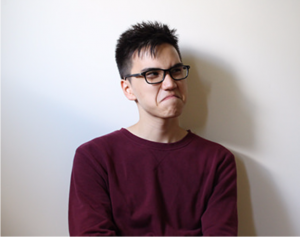
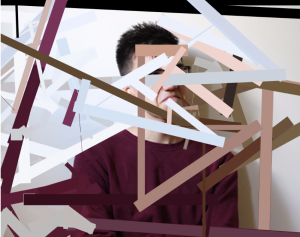
This week I used turtle graphics to abstract colours from a portrait and “painting” with strokes randomized by mouse movements and those colours.


mmiller5-Looking Outwards-11


Computer generated chorale based off Bach’s compositions

This week, I’ll be looking at a Bach Style Chorale created by the program EMI (or Emmy, I dunno) and David Cope.  EMI, or Experiments in Musical Intelligence, is a program made by David Cope in 1981 that composes music in the styles of various composers, essentially making pieces that sound as though they were written by those composers.  Abstractly, the program works in three steps: deconstruction–analyzing pieces of the selected works–, signatures–identifying common aspects of works–, and compatibility– recombining these parts into new pieces.  I find this to be very inspiring because its goal is to computationally analyze musical structure and then produce something from that, potentially creating limitless numbers of works that follow existing styles.  This method could be utilized by composers to analyze their own works to aid their composing process, allowing man and machine to work together to make works of art.

hyt-Looking-Outward-11: Sound Art

Live performance documentation of Samson Young’s Nocturne (2015)

For this week’s Looking Outward post, I found inspiration through Samson Young’s work of art. He is described as a rising sound artist based in Hong Kong and with a strong background in music composition. While he’s concentrated on the expression using sounds, he also incorporate them into live performances, visual drawings and films. The particular project that interested me was Nocturne (2015), a live performance that he conducted in team gallery, NYC. He sits in a position surrounded by drummer’s set, various instruments, found objects and connected amplifiers attached to the objects. A old television screen is also placed in front of him, playing muted footages of night bombings found on the Internet, most of which are US attacks in the middle east as well as ISIS gulf war, etc. He aims to improvise the explosion sounds with “foley technique” and broadcast it on a pirated radio frequency so that the audience could experience the performance using transportable radios. Since the found footages are political and pointing to the specific war-torn countries, the performance seems to be a playful yet sarcastic commentary toward the authority.

Even though the sound is mainly created by the artist, the computation element lies within the video footages, as it shows the frequency of the bombing and the artist aligns his action based off of the frequency. I think the imitation of everyday / common-heard sounds is definitely something I am interested in, and I wonder if it would be possible to recreate them by playing with the p5.sound library for future projects.


hschung-LookingOutwards-11

My LookingOutwards-04 was more about uniquely produced music, so I am taking the opportunity to explore sound art.

As I was searching for computational sound art, I came across a website for EarSketch- a program used to teach students about computer science through coding music. Students are taught to code in Python or Javascript, and learn how to use loops, compose beats, and add effects to make music.

EarSketch hosts a national competition every year to encourage students to code music creatively. I liked a winning submission from the 2017 competition, titled Mid Day Parade Competition Song, created by student Robert Marcez. I thoroughly enjoy his song because it actually sounds good, like a real song. It’s full of complexities, crescendos, and even a beat drop of sorts, that make it feel like a full song. More than that, I’m impressed that this high school student made a song from scratch via the medium of code, which is something I actually haven’t thought much about before. He was able to manipulate different components of the song, make his own functions to easily manipulate them, and creatively exercise his knowledge of code. It reminds me there are many ways to blend the fields of science and art.

Robert’s coded song- press the play button to listen! It’s quite good.
https://earsketch.gatech.edu/earsketch2/#?sharing=2K1nSohUQd3YaLpD4Zvohw

A list of the winners from 2017. Robert’s song is posted first, and there’s a blurb from him about what he was thinking as he created his song.
https://earsketch.gatech.edu/landing/#